
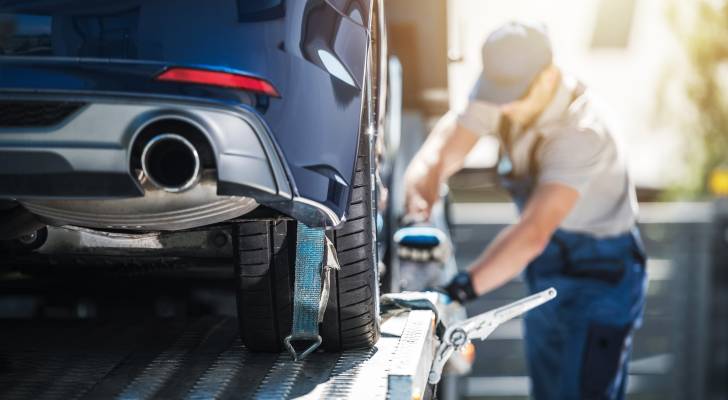
Auto repossessions have increased in recent years as vehicle prices rose amid high interest rates and living costs. Cox Automotive estimates yearly auto repossessions went up about 43% between 2022 and 2024, reaching 1.73 million units, the highest since 2009.
Many people are caught off-guard by how quickly a repossession can occur and how costly it can be even after the vehicle is taken.
Auto loans have become significantly more expensive over the past few years, with delinquency rates climbing steadily. Federal Reserve Bank of New York data shows just under 4% of auto loans were 90 days or more delinquent at the end of 2022, a figure that increased to about 5% by the end of 2024, where it has remained fairly steady as of September 2025.
Analysts say U.S. tariffs on imported vehicles and auto parts are starting to push prices even higher, as automakers and suppliers adjust pricing and production in response to trade barriers. As a result, many buyers may be continuing to lock into auto loans that are straining already tight household budgets.
Borrowers might assume they have more time than they actually do before the repossession process begins. In reality, repossession rules vary by state and lender, and some auto loan contracts permit repossession after a single missed payment.
Common warning signs that repossession may be imminent include missed or late payments that place the loan in default, allowing the lender to act quickly once the contract is breached. Other red flags include notices about force-placed insurance or changes to monthly payments, which can signal that an account is already at risk.
Lenders can repossess a vehicle once the loan is in default. According to the Federal Trade Commission, lenders generally do not need a court order to repossess a vehicle, as long as they don't "breach the peace" during the repossession process.
Losing the car is often only the beginning of the financial impact of repossession. After repossession, lenders typically sell the vehicle at auction, often for less than its market value. If the sale proceeds don't cover what you owe, you may be left with a deficiency balance, meaning you still owe money even though you no longer have the vehicle.
On top of that, borrowers can be charged towing and repossession fees, daily storage charges, and auction or administrative costs. These added expenses can quickly total hundreds or even thousands of dollars, while the repossession itself can remain on your credit report for up to seven years.
If you're behind or worried you might fall behind, acting early can significantly reduce the damage. It's best to contact your lender as soon as possible to ask about temporary hardship forbearance, payment extensions or modified due dates, and loan term extensions to lower monthly payments.
Many lenders would prefer to restructure a loan rather than go through the repossession process, especially if you've previously shown you can make payments on time. You should also review your state's repossession laws, typically available through your state attorney general's office, since some states require specific notices or allow you to "cure" a default by catching up on missed payments.