
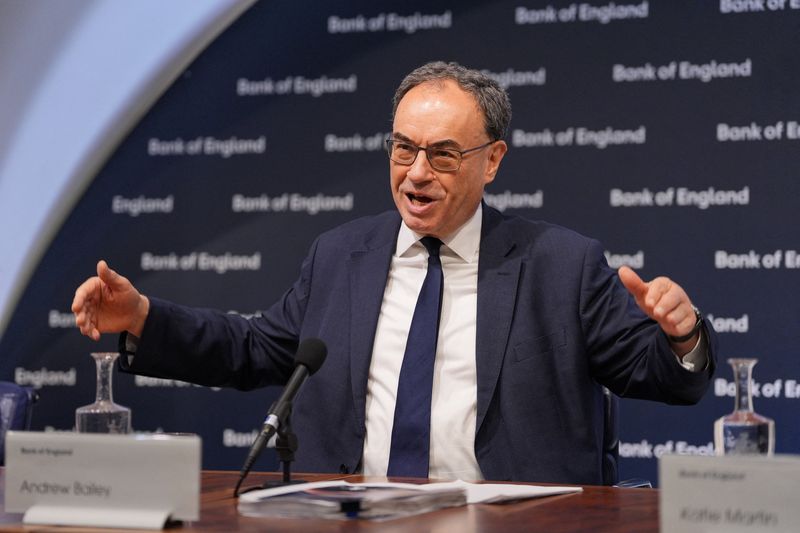
Bank of England Governor Andrew Bailey said on Tuesday that the central bank must remain "very alert" to geopolitical risks. He made the remarks during a session with the British parliament's Treasury Committee, as financial markets experienced fresh turmoil following U.S. President Donald Trump's stated desire to control Greenland and ongoing trade war concerns.
Wall Street futures hit one-month lows, the dollar declined for a second day, and long-dated government bond yields rose sharply. Bailey noted that geopolitical risks have increased over the past year, contributing to U.S. dollar weakness and record high gold prices. However, he said the impact on markets and economic growth has been less than feared so far.
"We worry considerably about how markets can react to those things. Market reactions have actually been more muted than we would have feared and expected," Bailey told lawmakers.
He explained that investors are balancing "extreme" statements against their experience that such threats often do not materialize. Some investors have adopted an approach known as "TACO," short for "Trump always chickens out," discounting Trump's public statements.
"I'm not saying I'm a believer in this sort of 'TACO trade' notion. But did the tariffs follow through to some of the more extreme things that were being said?" Bailey said. "After Liberation Day (tariff announcements) ... the U.S. authorities reconsidered. As a result, the market volatility that we saw ... calmed down."
When asked about Trump's pursuit of Greenland and trade tensions, Bailey declined to specify if these issues could trigger financial upheaval. "But the level of geopolitical uncertainty and the level of geopolitical issues is obviously a big consideration," he said. "We have to remain very alert to these things."
BoE Deputy Governor Dave Ramsden added that U.S., British, and euro zone government bond yields have been fairly stable this year, with Japanese government debt being an exception due to domestic political factors. He rejected a suggestion that any loss of confidence in U.S. government debt could boost demand for British government bonds.
"Given our relative reserve currency statuses ... it would have negative consequences," Ramsden said. "Increasingly we are seeing that U.S. yields might rise and we see the consequence in our yields rising."
On Tuesday, British government bond yields rose sharply, mirroring a rise in U.S. borrowing costs. Thirty-year gilt yields were on course for their biggest daily jump since November 14.