
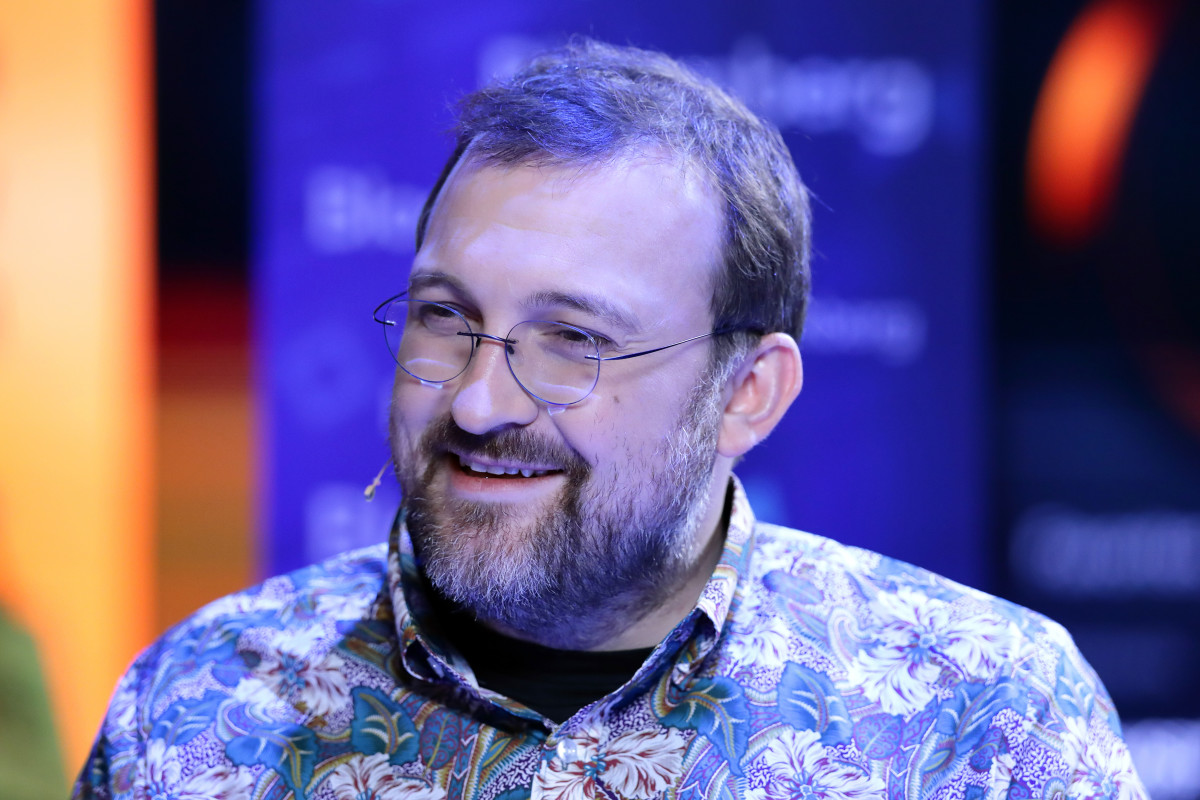
Charles Hoskinson, the CEO of Input Output Group and a co-founder of Ethereum, spoke with host Scott Melker on 'The Wolf of All Streets' and 'TheStreet Roundtable.' He described the crypto industry entering 2026 as bruised and fatigued but quietly laying groundwork for evolution.
Hoskinson offered a blunt assessment of the current state amid market crashes, regulatory pressures, and unfulfilled bull-market promises. "It's kind of like Japan 1946," he said. "We've been carpet nuked, all the cities have been fire bombed."
He compared the ongoing slump to the U.S. atomic bombings of Hiroshima and Nagasaki in 1945. Hoskinson described the period following 2022 as an extended trauma for the industry, recalling high-profile project implosions like FTX and Terra-Luna, and regulatory actions under SEC leadership.
"And so we had 'Scary Gary' for two years and it was horrible," Hoskinson said. He added that even Donald Trump's return to the White House in 2025 failed to deliver relief, instead bringing more confusion, with Trump launching a meme coin and no CLARITY Act so far.
Despite the turmoil, Hoskinson acknowledged meaningful technical progress continued behind the scenes. Zero-knowledge technology advanced rapidly, and Ethereum and Cardano projects shipped key upgrades. But he said a lack of regulatory progress led to a "bifurcated recovery," where Bitcoin surged on institutional adoption while altcoins lagged through 2025, leaving retail investors exhausted.
"It's now an institutional asset, it's not a Web3 asset anymore," Hoskinson said of Bitcoin. He explained that much of the broader crypto market stagnated in 2025.
Hoskinson offered a blunt explanation for October 2025: "We got f***ed again." He said everyone is mentally tired and retail traders don't want to come back. "They're like, my wife is gonna divorce me if I keep buying this stuff because every time I say it's gonna 10x I just get destroyed," he quoted.
He stated that 2026 is a "reset" for the crypto industry, drawing parallels to earlier transitions from Bitcoin's fork-heavy era to Ethereum's smart contracts to third-generation platforms like Solana and Cardano. Each new generation ignited interest by introducing something fundamentally new, he underlined.
Hoskinson believes a "fourth generation" of crypto technology will bring back retail traders. This era will be defined by three core breakthroughs: rational privacy for user privacy with selective disclosure; smart compliance for making smart contracts compliant with AML and KYC norms for real-world asset tokenization; and chain abstraction to simplify blockchains so users can transact without understanding complex technology.
He predicted that by 2030, 90% of decentralized exchange transactions and 60% of decentralized finance activity will occur through intent-based systems, where users declare intent rather than detail every step. The goal is to make crypto transactions as easy as buying a latte at Starbucks, Hoskinson explained.
As privacy becomes programmable and identity integrates into blockchain infrastructure, regulated and unregulated financial products will coexist on the same rails, he predicted. The result is a massive expansion of crypto's addressable market, with a total addressable market of about $10 trillion bringing new users.
Chain abstraction will allow users to interact with crypto assets directly from phones without managing wallets, Hoskinson envisioned. The fourth generation signifies the merger of DeFi and TradFi, likely leading to a 2-3 times surge in user count and a 10 times surge in assets under management within the ecosystem, he predicted.