
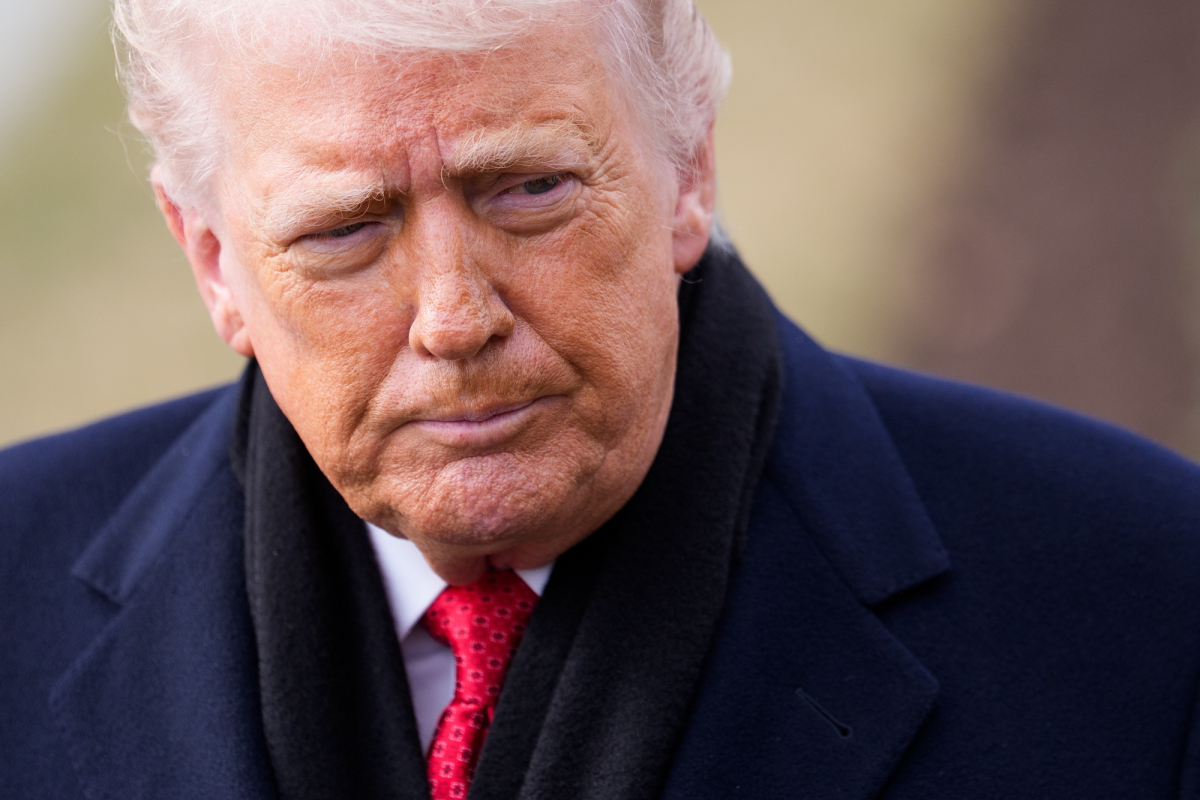
The US dollar faced downward pressure on Monday after President Donald Trump announced a 10% tariff on European countries opposing his plans to acquire Greenland. The Bloomberg Dollar Spot Index declined 0.1% following the new levy on goods from eight nations that back Denmark's sovereignty over Greenland. Treasury futures showed mixed trading with cash markets closed for a US holiday.
European currencies strengthened, with the Swiss franc leading gains among Group-of-10 currencies amid heightened demand for safe-haven assets. The euro climbed from its lowest point in nearly two months.
Analysts offered immediate reactions to the developments. Kamakshya Trivedi, chief FX and EM strategist at Goldman Sachs Group Inc., stated that in an environment of disruptive US policy where confidence in US assets is questioned, the dollar tends to depreciate. He expected the Swiss franc to benefit primarily within a broader weaker dollar context.
George Saravelos, global head of FX Research at Deutsche Bank AG, noted that with USD exposure still high across Europe, recent events could encourage dollar rebalancing. He said the key factor to monitor would be whether the EU activates its anti-coercion instrument by proposing measures affecting capital markets, which would represent a weaponization of capital rather than trade flows and be highly disruptive.
David Forrester, a senior strategist at Credit Agricole CIB, remarked that Trump's tariff threats have revived the 'sell America' trade. He suggested the market would also watch for the 'TACO trade' as Trump might use tariffs as a negotiating tactic, providing some USD support. Forrester added that the euro could be a major loser from growing geopolitical risks under Trump's presidency in 2026, with tariffs potentially adding to cyclical headwinds for the eurozone economy and reducing pressure on Russia to end its war in Ukraine.
Chris Weston, head of research at Pepperstone Group Ltd., observed that US assets, including the dollar, now carry a higher political risk premium, which could lead foreign investors to reduce exposure.
Richard Franulovich, head of FX strategy at Westpac Banking Corp., commented that Greenland-related geopolitical risks have reignited de-dollarisation discussions, highlighting the US's large net international liabilities as a vulnerability.
Mingze Wu, a currency trader at StoneX in Singapore, reported seeing some USD weakness, attributing it to renewed US isolationism. He noted that markets have grown accustomed to tariffs, likely resulting in muted reactions.