
European stocks declined from near-record levels on Monday after former President Donald Trump announced new tariffs targeting eight European countries in relation to Greenland. The Stoxx Europe 600 Index dropped 0.8% by 9:24 a.m. in Paris.
Automakers and luxury stocks, which have significant exposure to the U.S. market, saw heavy losses. In contrast, defense sector shares rose amid heightened geopolitical tensions. U.S. equity futures slipped, but the cash market was closed for a public holiday.
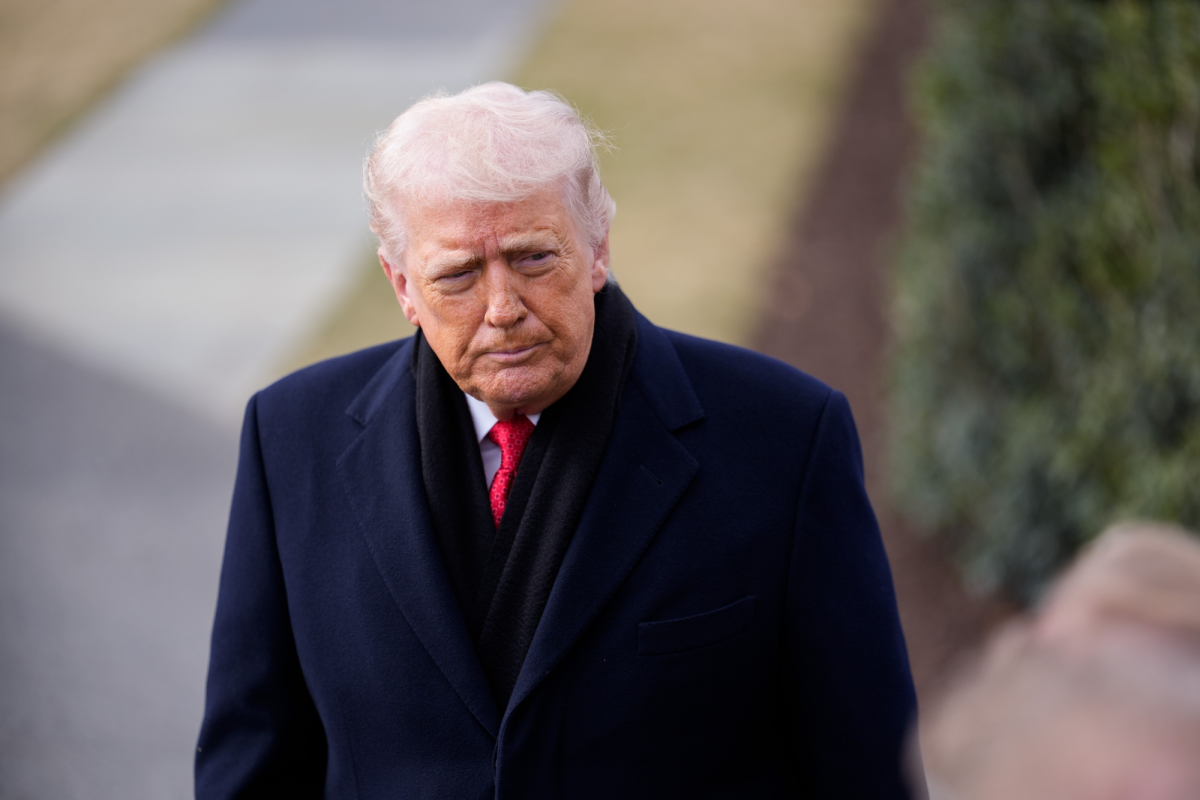
Trump announced a 10% tariff effective February 1 on goods from European countries that have supported Greenland against U.S. threats to seize the territory. He stated the levies would increase to 25% in June unless "a Deal is reached for the Complete and Total purchase of Greenland."
European leaders quickly criticized the announcement. The European Union is reportedly discussing potential tariffs on €93 billion ($108 billion) of U.S. goods if Trump implements the 10% levy. The EU's most immediate response was to halt approval of its July trade deal with the U.S.
Market reactions were pronounced. Luxury giant LVMH, German carmakers Volkswagen AG and Mercedes-Benz Group all fell at least 3%. Defense firm Rheinmetall AG gained more than 2%.
Credit risk measures in Europe increased. The iTraxx Crossover index of junk-rated credit default swaps rose as much as 8.5 basis points, marking its largest one-day jump since November 18. A similar gauge for high-grade firms rose up to 1.8 basis points.
In currency markets, the U.S. dollar declined against most Group-of-10 peers, while the Swiss franc, a traditional haven, strengthened. Short-dated government bonds advanced, with the German two-year yield falling three basis points to 2.08%. U.S. 10-year Treasury futures remained steady.
Analysts offered varied perspectives. Vincent Juvyns, chief investment strategist at ING in Brussels, said, "This new situation may trigger some profit taking. If one looks strictly at the raised tariffs, it's something that economically could be absorbed but the possibility of a break within the Western world would have consequences that I fail to measure the scale of."
Alexandre Baradez, chief market analyst at IG in Paris, noted, "The nervousness is palpable. All in all, you have so many issues piling up — from credit cards to the independence of the Fed and tariffs — that I really don't see the case for stock markets to keep on breaching new records. Investors might be tempted to cut risk and take some profits."
Goldman Sachs Group Inc. economists estimated a 10% U.S. tariff would lower real GDP by 0.1% to 0.2% across affected countries through reduced trade, with Germany facing the largest impact. They added, "The hit could be larger should there be adverse confidence or financial market effects."
Deutsche Bank AG predicted limited fallout for the euro, citing U.S. reliance on European capital. George Saravelos, Deutsche's global head of FX research, wrote, "The key thing to watch over the next few days will be whether the EU decides to activate its anti-coercion instrument by putting measures that impact capital markets on the table. It is a weaponization of capital rather than trade flows that would by far be the most disruptive to markets."
Other market participants commented on the developments. Krishna Guha of Evercore ISI said, "Markets will trade risk-off, but bet that either the Supreme Court will take away Trump's authority to impose tariffs in this manner, or Trump will deliver a TACO reversal anyway." Vincent Mortier of Amundi stated, "Such a move is in line with the way the U.S. administration pressures other countries, including allies, to achieve its goals." Christopher Dembik of Pictet Asset Management viewed it as "a short-term spike of volatility."
Since the start of 2025, the Stoxx Europe 600 has climbed 36% in dollar terms through Friday, doubling the S&P 500's gains over the same period. The European benchmark now trades at nearly 16 times forward earnings, above its 15-year average and narrowing its discount to U.S. peers to about 30%.