
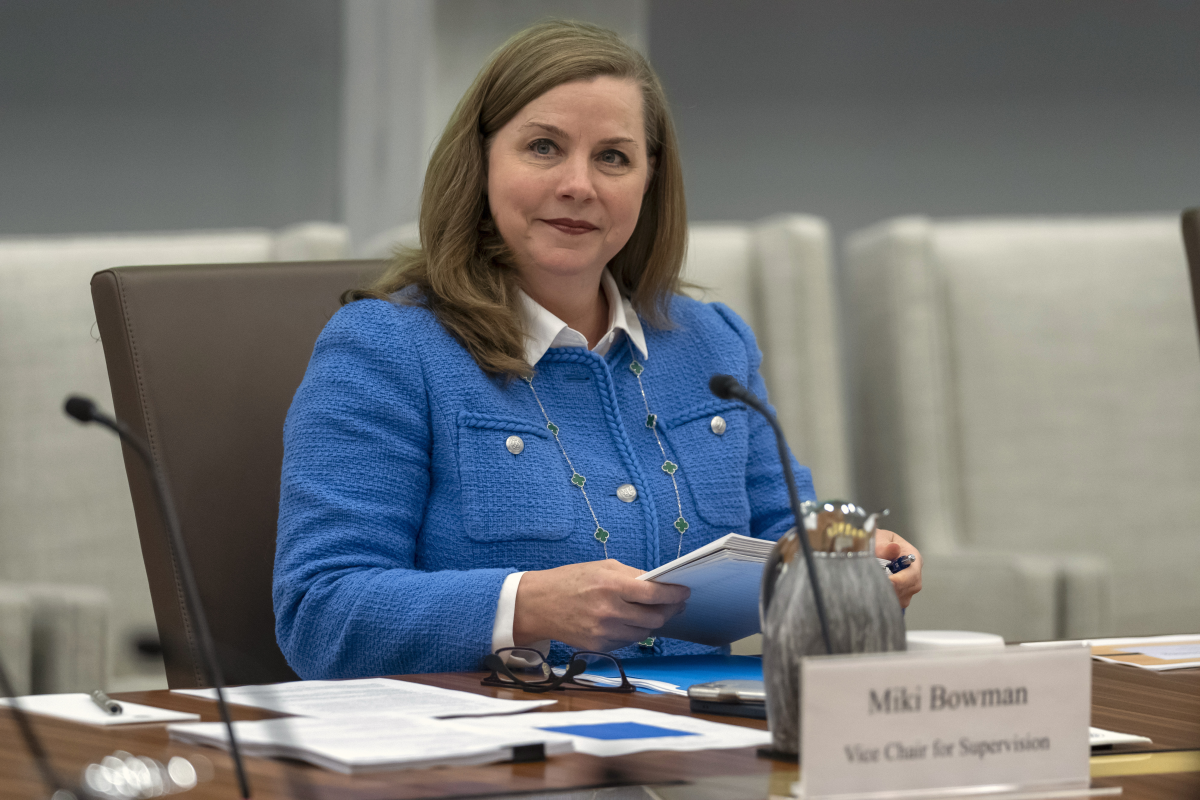
Federal Reserve Vice Chair for Supervision Michelle Bowman stated on Friday that the central bank must remain prepared to reduce interest rates further, pointing to what she described as "signs of fragility" in the job market.
"Absent a clear and sustained improvement in labor market conditions, we should remain ready to adjust policy to bring it closer to neutral," Bowman said during a speech at the New England Economic Forum in Foxborough, Massachusetts. "We should also avoid signaling that we will pause without identifying that conditions have changed."
Bowman observed that even as inflation approaches the Fed's 2% target, she continues to see indications of weakness in employment. She noted that recent declines in job openings and softer hiring, as reported by the Bureau of Labor Statistics, could lead to a larger increase in unemployment.
She warned that if companies move from slowing hiring to cutting positions, layoffs could escalate and the job market could deteriorate rapidly.
Private-sector job gains averaged only about 30,000 per month in the fourth quarter, Bowman said, far below the level she believes is necessary to prevent the unemployment rate from rising. Most of these gains occurred in healthcare and social services, suggesting hiring has continued to soften gradually since early last year.
"We should continue to focus on risks to our employment mandate and preemptively stabilize and support labor market conditions," Bowman stated.
The central bank should set interest rates proactively based on forecasts, she said, adding that placing too much emphasis on even the most recent data is backward-looking and increases the risk of falling behind. Bowman's position differs from other Fed officials, including Cleveland Fed president Beth Hammack, Dallas Fed president Lorie Logan, and Kansas City Fed president Jeff Schmid, who have said they see no need for further "insurance" cuts to protect the job market.
On inflation, Bowman estimated the Fed's preferred inflation measure, the core Personal Consumption Expenditures Index, was at 2.9% in December. The official reading will be released next week. She said that adjusting for the presumed effects of tariffs would bring inflation closer to the Fed's 2% goal.
Bowman expects the economy to continue expanding at a solid pace this year and the labor market to stabilize near full employment as rates become less restrictive.
She noted that the economy appears to have been supported by a surge in equity prices and investment in AI, but expressed concern about a potential pullback in stocks. While stock market valuations may seem stretched, expected earnings growth for AI-related companies has been high, and much of the investment has been self-financed so far.
"I am concerned that disappointing news on AI investment returns could lead to a sharp correction in equity prices," she said.
However, she added, "the economy continues to show elevated productivity growth likely due, in part, to increased adoption of AI technologies."
Although rates are closer to her estimate of neutral after three cuts at the end of last year, Bowman sees policy as moderately restrictive.
"Looking ahead, as we gather additional evidence on economic activity, labor market conditions, and inflation, it will be important to continue assessing the appropriate path of policy and the timing of further adjustments," she concluded.