
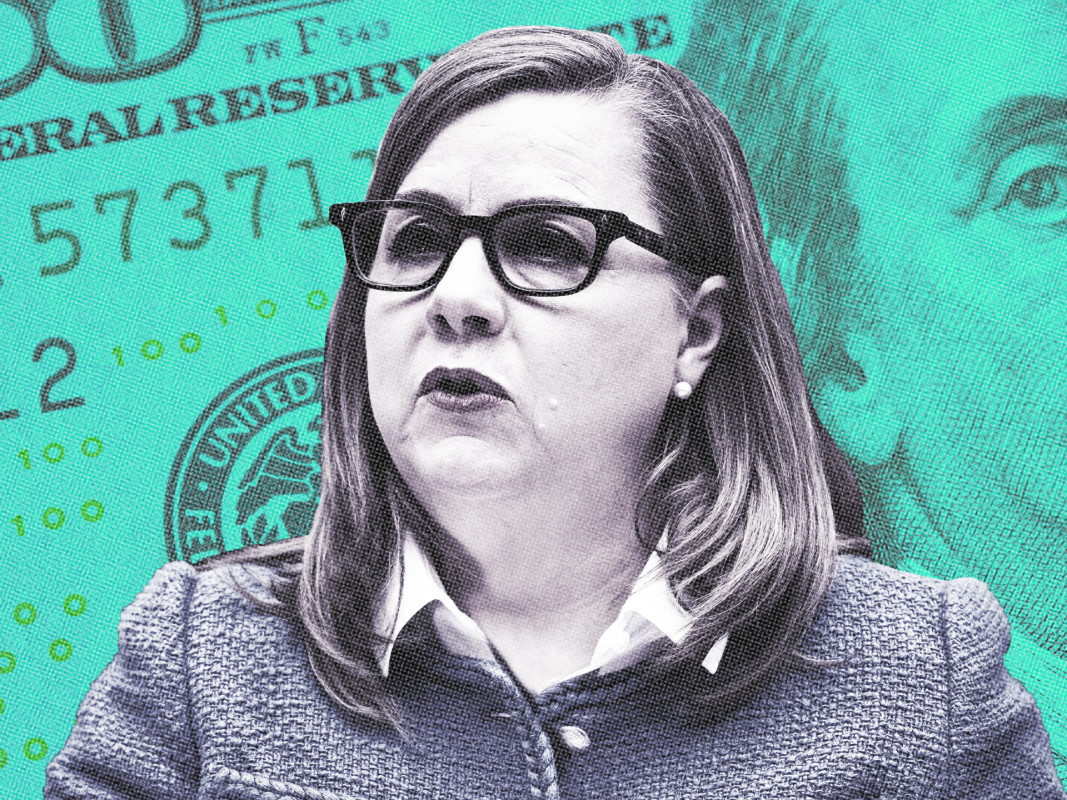
Federal Reserve Vice Chair Michelle Bowman stated on January 16 that the central bank should be prepared to cut interest rates further if the labor market shows additional weakening. Her comments sharply contrast with those made a day earlier by several Fed regional bank heads, who cited inflation concerns as evidence the independent central bank needs to continue holding rates steady.
Bowman said the Fed's monetary policy remains moderately restrictive, and that an expected pause in rate cutting may be premature. "My view is that we should continue to focus on risks to our employment mandate and preemptively stabilize and support labor-market conditions," she said.
The division among policymakers reflects tensions in the Fed's dual mandate of stable prices and low unemployment. The current Federal Funds Rate is 3.50% to 3.75%. The Federal Open Market Committee cut the funds rate three times for a total of 75 basis points in 2025.
After the December rate cut, Fed Chair Jerome Powell said that the lowering of rates brought monetary policy "within a broad range of neutral." Most Fed officials currently estimate that the long-run neutral rate falls between 2.5% and 3% but roughly 4.5% to 5% when accounting for inflation.
Looking ahead to the rest of 2026, the Fed's own median projection or "dot plot" suggested there would be only one additional 25 basis points cut. This would move the rate to around 3.25% to 3.50% by year end. Traders are slightly more dovish, penciling in two or three rate cuts but not until June or later. That's when Powell's replacement as chair is expected to be installed.
President Donald Trump has spent the past year criticizing and threatening Powell and the FOMC for not lowering rates to around 1%. The White House maintains this will stimulate the stagnant housing market and reduce the amount of interest on the nation's debt, which currently hovers between approximately $38.4 trillion to $38.5 trillion.
Employers added fewer jobs than expected in December, capping a yearlong slowdown in the labor market defined by cautious hiring and limited layoffs. Despite that, the unemployment rate ticked down to 4.4%. "The share of those working part time for economic reasons, meaning not by choice, has increased considerably over the past two months," Bowman said. "This has coincided with a rise in the share of multiple job holders, suggesting that an increasing number of workers struggle to make ends meet," she added.
Bowman said the Fed should not signal that monetary policy is on hold, as many of her colleagues have done this month, given the risk of further deterioration in the jobs market. "We should also avoid signaling that we will pause without identifying that conditions have changed," she said. "Doing so will indicate that we are not attentive or responsive to the recent and expected path of the labor market."
Bowman said sticky inflation pressures are easing thanks to a waning impact from tariffs. She described the U.S. economy as "resilient" and said she was "increasingly confident that inflation will come down toward 2 percent as tariff effects on goods inflation continue to wane in coming months."