
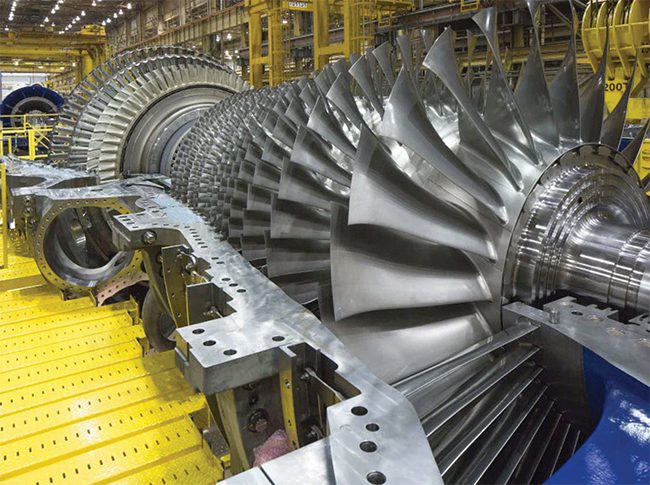
The gas turbine industry is confronting its biggest supply chain disruption in decades, with order backlogs stretching years ahead and utilities rushing to secure dispatchable power capacity. In interviews with POWER, EPRI principal technical executive John Shingledecker and senior program manager Bobby Noble identified rotor forgings and hot-section blades as the main bottlenecks, citing limited suppliers and complex manufacturing processes.
Some large frame turbines have been delivered without rotors or blades, with installation completed later on-site to keep construction timelines. Delays in new blade deliveries have pushed utilities toward reusing, remanufacturing, and repairing components, the experts said.
Qualifying new vendors does not provide a fast solution, the researchers explained. Timelines depend heavily on original equipment manufacturers, suppliers, and specific components. Large forgings are especially problematic because few global suppliers exist, many already serving multiple OEMs. For advanced turbines needing single-crystal blades or exotic materials, qualification grows even more intricate.
While raw material availability is generally not the issue, material costs are rising. Competition for nickel superalloys and cobalt has intensified, partly due to lithium-ion battery demand. Aerospace and energy were once cobalt's primary users, but battery markets now strongly influence pricing, they noted.
Today's demand differs from the late-2000s boom driven by low gas prices, Shingledecker and Noble stated. Current factors include data center needs, limited dispatchable options amid growing grid renewables, and long-term electrification growth. New coal generation is largely off the table for utilities, while natural gas supplies are more abundant than during the earlier boom, offering stability for gas-fired investment.
Data centers are creating sharp short-term demand for dispatchable power, the EPRI researchers said. Though not typically seeking large-frame turbines, they compete directly with utilities for small- to mid-sized units in the 30 MW to 100 MW range, prime for peaking plants. This competition is creating openings for new market entrants.
Utilities needing capacity by 2028 but facing backlogs to 2030 have few but viable options, the experts explained. Many are extending existing thermal asset lives, pursuing repowering projects, and implementing turbine uprates via technologies like inlet fogging and advanced modifications. EPRI, with the U.S. Department of Energy's National Energy Technology Laboratory, is studying uprate scenarios that could boost output by double-digit percentages.
Renewables paired with battery storage remain part of the capacity mix. Pressure is accelerating adoption of smaller, modular solutions. Orders for turbines under 20 MW hit record highs in 2025, and reciprocating internal combustion engine plants are gaining ground. Aeroderivative units offer flexibility and quick deployment but face similar backlog pressures from competition with commercial aviation for parts and manufacturing capacity.
When supply chains are strained, quality issues can arise, the EPRI experts noted. Problems often only become apparent after components enter service, making them hard to trace. EPRI's research, including process compensated resonance testing, has helped detect quality defects early. Vendor differences have been spotted through serial number structures in the past, they said.
The competitive landscape is shifting. While GE Vernova, Mitsubishi Power, and Siemens Energy remain dominant, some reshuffling is expected, Shingledecker and Noble mentioned. Doosan Enerbility's recent entry into North America signals new competition. However, with overall market expansion from rising demand, market share changes may matter less than the broader growth in opportunities.
Predicting how long backlogs will last is challenging, the researchers acknowledged. Expanding factory capacity and onboarding new vendors is a long-term endeavor. Prolonged turbine shortages could alter the generation mix for 2030 and beyond. Supply chain struggles, coupled with sustained demand growth, are renewing interest in advanced nuclear and long-duration energy storage, the experts observed.
Utilities increasingly see the need for diverse generation portfolios to manage risks from supply chains, fuel costs, and system flexibility, they said. The turbine bottleneck, while painful now, may eventually speed the shift toward a more varied and resilient power generation fleet.