
Goldman Sachs reported fourth-quarter net income of $4.6 billion, or $14.01 per share, a 12% increase from the same period last year. This result exceeded analyst expectations, which did not account for the bank's recent deal to transfer its Apple credit card portfolio to JPMorgan Chase.
The handoff included a $2.12 billion net benefit from released loan loss reserves, adding a one-time $0.46 per share to earnings. It also reduced Goldman's quarterly net revenue by 3% to $13.5 billion compared to the fourth quarter of 2024.
Revenue from dealmaking fees rose 25% to $2.57 billion, meeting analyst forecasts and outpacing most big bank rivals except Citigroup. Goldman's M&A advisory business surged 41% to $1.36 billion from the year-ago quarter, roughly in line with expectations. Equity trading fees in the markets unit jumped 24% to $4.3 billion in the quarter, with full-year trading up 16% from 2024.
The bank's stock edged higher early Thursday and has gained over 60% in the past 12 months. Goldman also increased its quarterly dividend by 50 cents to $4.50.
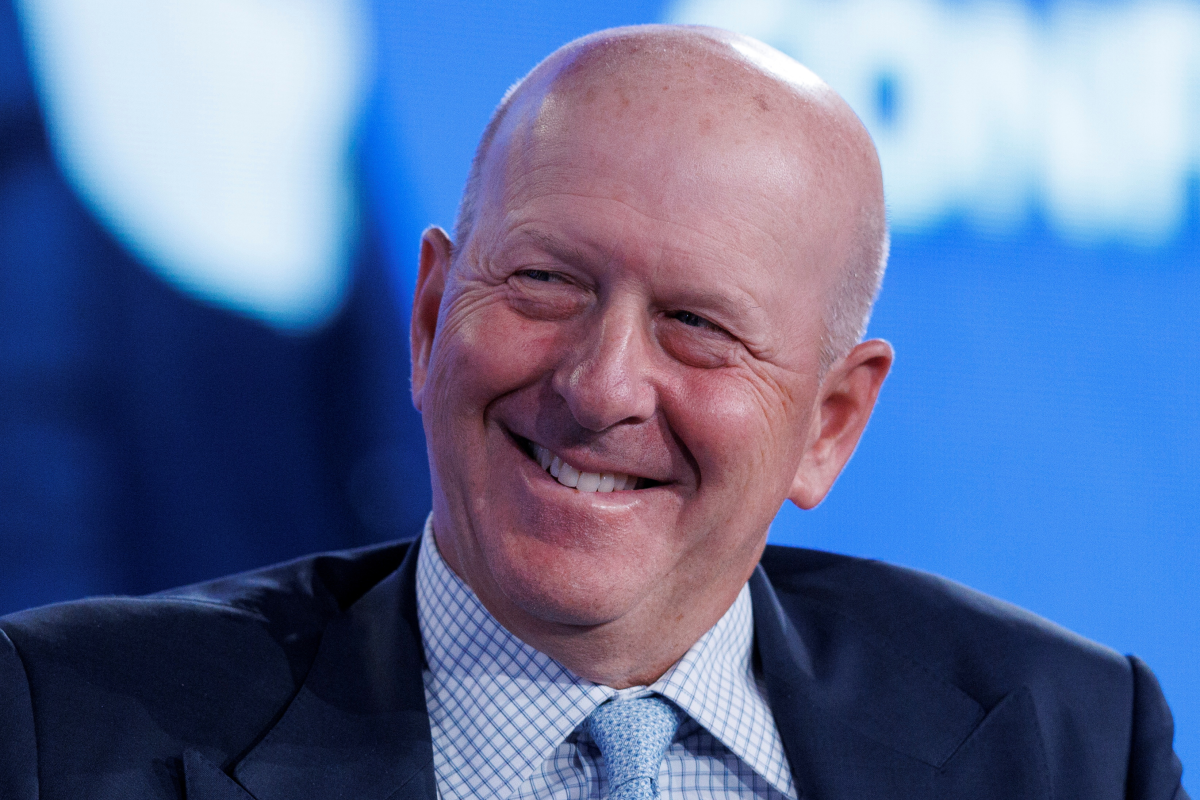
"We continue to see high levels of client engagement across our franchise and expect momentum to accelerate in 2026, activating a flywheel of activity across our entire firm," CEO David Solomon said in a statement. "While there are meaningful opportunities to deploy capital across our franchise and to return capital to shareholders, our unwavering focus remains on maintaining a disciplined risk management framework and robust standards," he added.
For 2025, Goldman recorded its second-highest annual profit at $17.2 billion, a 27% rise from 2024, along with its second-highest full-year net revenue and dealmaking fees. The bank set new targets for its asset and wealth management division, aiming for "high-teens" returns instead of "mid-teens," though the division's net revenues fell 1% to $4.72 billion year-over-year.
While dealmaking activity spread across Wall Street for much of 2025, it slowed in the final quarter for some of Goldman's rivals. JPMorgan Chase reported a 4% drop in investment banking fees from a year ago, missing analyst and internal expectations. CFO Jeremy Barnum cited "the timing of some deals that were pushed to 2026" as a factor. "We're obviously optimistic on investment banking fees generally," Barnum told analysts, while CEO Jamie Dimon described competition in dealmaking as "like trench warfare."
Bank of America saw a 1% increase in investment banking fees, exceeding Street expectations despite declines in equity underwriting and merger advisory services. Wells Fargo's fees fell 1%, though the bank posted its highest full-year dealmaking revenue ever. Citigroup set a record, with M&A advisory revenue soaring 84% in the quarter, driving total dealmaking fees up 35% to $1.29 billion, according to CEO Jane Fraser.