
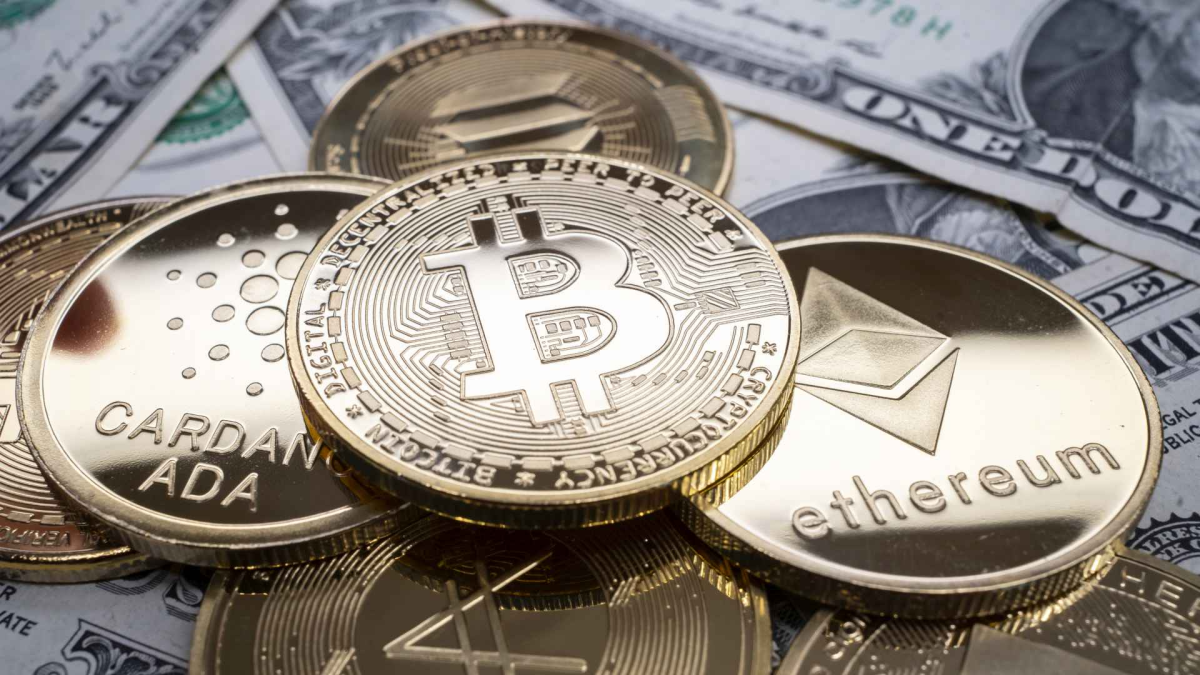
Amid rising inflation and market instability, a group of investors has expressed confidence in cryptocurrency as an asset class. They cite its potential to hedge against inflation and diversify portfolios.
Bitcoin, with its supply capped at 21 million coins, is highlighted as a key example. This fixed limit, encoded in its system, distinguishes it from government-issued currencies, which central banks can expand. Investors concerned about cash's long-term purchasing power find this feature reassuring.
Over the past decade, Bitcoin has seen significant growth periods, leading some to compare it to digital gold. Its scarcity and global accessibility attract those seeking independence from national monetary systems. Crypto assets operate on decentralized networks, allowing transactions without government or financial intermediaries, which some view as a safeguard against traditional financial frameworks.
As long as investors hold private keys, their assets remain accessible regardless of bank or government actions. These factors lead some to see crypto as a strategic asset offering inflation protection and diversification, noting its performance does not always correlate with stocks, bonds, or real estate, potentially acting as a hedge in uncertain markets.
Recent research indicates Bitcoin often reacts positively to sudden inflation spikes, supporting short-term protection. However, this relationship weakens over long periods, with Bitcoin's inflation hedging ability becoming inconsistent across market cycles, potentially disappointing those expecting a long-term store of value.
Bitcoin and cryptocurrency are inherently volatile, with markets rising and falling sharply, posing risks for portfolios. A position that appears as a winning inflation hedge one month can drop unexpectedly the next, a drawback for investors preferring stability or with low loss tolerance.
Traditional hedges like gold, while having limitations, are less volatile and considered more predictable. Crypto, in contrast, remains on the financial world's cutting edge.
Despite risks, crypto retains supporters grounded in several factors. It exists outside government control, appealing amid interest rate uncertainty and geopolitical tensions. As a new asset class, it allows diversification, with its movements not always syncing with other assets, reshaping portfolio risk profiles. Many investors see potential for asymmetric upside, accepting volatility for possible gains outweighing risks. Younger investors, comfortable with digital tools, view crypto as a natural part of modern investing.
Crypto can function as a short-term inflation hedge, diversification tool, or speculative opportunity with growth potential, but it should not replace traditional assets or guarantee long-term inflation protection. A balanced strategy treats crypto as a small part of a broader plan, with measured allocations for those embracing volatility, while others rely on established hedges and diversified portfolios. In an unstable world, some investors value an asset that operates by its own rules.