
Global upstream operators are expected to cut investment for a second consecutive year in 2026, with capital expenditure projected to fall by at least 2-3% year-on-year and more than 5% compared to 2024 levels. This comes as the industry contends with oil prices below $60 per barrel while focusing on long-term resilience. Wood Mackenzie has noted that operators will continue to pursue strategic, new growth opportunities in several regions worldwide.
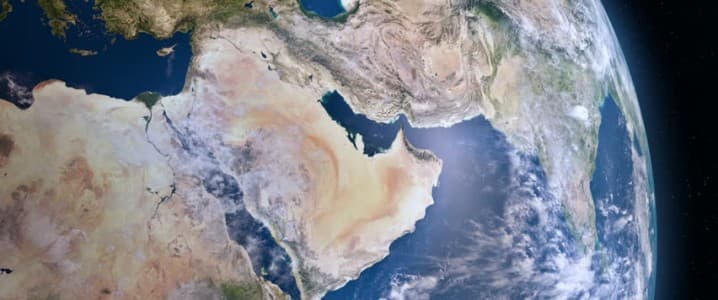
In the Middle East and North Africa, at least 20 billion barrels of oil equivalent are slated to be added through the 2030s via licensing rounds and contract negotiations.
Libya's National Oil Corporation launched its first oil exploration bid round in over 17 years in March 2025. Companies are expected to submit offers and open bids in February 2026. The round covers 22 onshore and offshore blocks, aiming to boost production and attract foreign investment after years of instability. The move aligns with Libya's goal to reach 2 million barrels per day production, a level near pre-2011 crisis output. This initiative is viewed as a landmark moment, opening a significant, resource-rich market to international energy companies.
Iraq, Kuwait, Oman, and Syria are poised to offer significant new oil drilling opportunities. Iraq and Oman are building export pipelines, Kuwait is expanding offshore, and Syria is opening up after years of conflict for new investment. These developments signal major activity in the Middle East's upstream sector.
Iraq and Oman have a preliminary agreement to build a crude oil pipeline from Basra to Duqm. This would diversify Iraq's export routes beyond the Ceyhan pipeline. Oman's Duqm port will host storage facilities, making it a key export hub that bypasses the Strait of Hormuz chokepoints.
Kuwait is expanding offshore production and drilling. A major find, the Nokhetha discovery by Kuwait Oil Company east of Failaka Island, contains estimated reserves of 2.1 billion barrels of light oil and 5.1 trillion cubic feet of gas. This discovery marked a significant milestone in Kuwait's offshore exploration program. Subsequent finds like Jaza have reinforced these efforts, noted for high-quality, low-emission resources.
ADNOC Drilling is expanding into Kuwait and Oman by acquiring a 70% stake in SLB's land drilling rig business. The deal secures six rigs in Oman and two in Kuwait, with plans to double that fleet and further grow in the region through new tenders and acquisitions.
Syria is actively reopening for energy investments following the fall of the Assad regime in late 2024 and the subsequent easing of international sanctions. The new Syrian government is pursuing an investment-driven recovery model and has signed billions of dollars in deals with foreign companies. The US, EU, and UK have eased many economic sanctions, removing a major hurdle for international firms and allowing Syria to reconnect to the SWIFT international payments system.
The Syrian government has established a consolidated energy ministry. It is planning to construct a new 150,000 bpd oil refinery and is hosting international oil and gas exhibitions to attract more capital.
In May 2025, a consortium of Qatari, Turkish, and U.S. companies signed a landmark $7 billion agreement to develop 5 GW of new power capacity, including gas-fired and solar power plants. Saudi Arabian firms have signed agreements for new oil and gas development, including a 500 MW renewable energy project and a 1.65 million-barrel crude grant to stabilize supply. UAE-based DP World took over management of the Tartus port, enhancing logistics for energy trade.
Middle Eastern nations are actively seeking major International Oil Companies for investment in energy and infrastructure. This is driven by economic diversification goals and a desire for broader partnerships. European and American companies are stepping in, drawn by opportunities in gas, renewables, and digital transformation.