
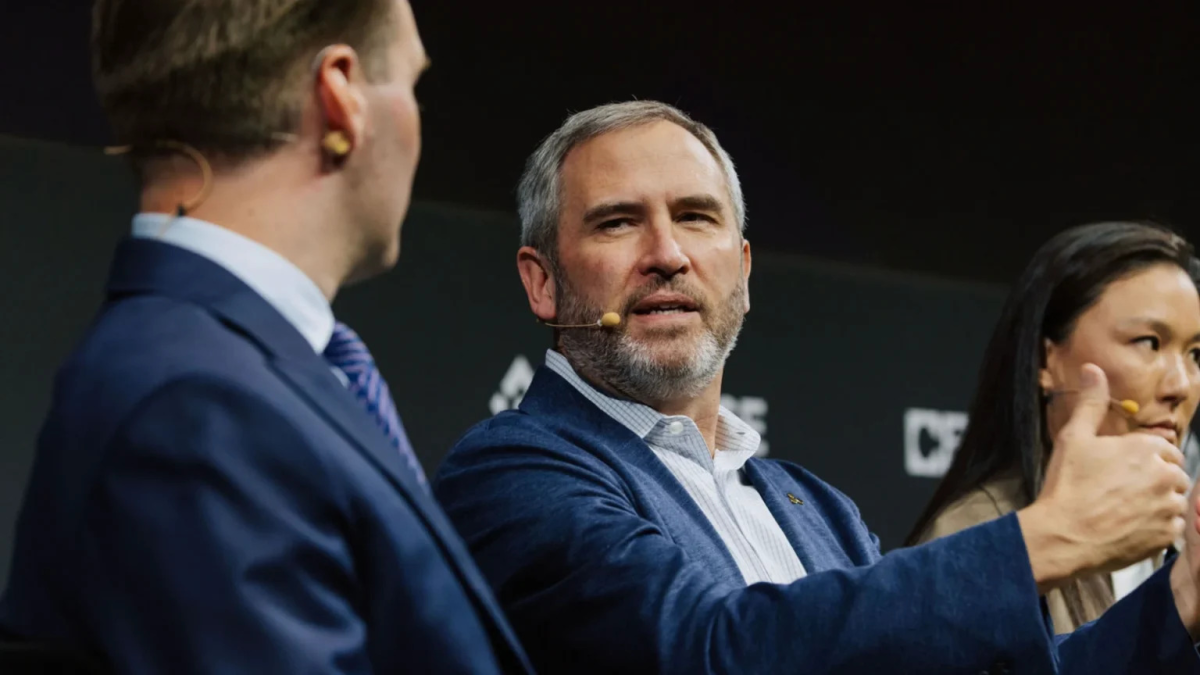
Online XRP communities saw a surge in optimism this week after Ripple CEO Brad Garlinghouse liked posts on the social media platform X. The activity was interpreted by some supporters as a signal of confidence in the token's future price potential.
An XRP supporter posted a message encouraging wealth redistribution if holders profit significantly. "When you become an XRP millionaire, don't forget to give back. Support those in need—your family, your neighbors, and those struggling on the streets. If God blesses you with abundance, let it flow through you to bless others. Just my thought," the user wrote.
The same user later claimed Garlinghouse had liked that post and another within 24 hours. "No way. Brad, Ripple's CEO, just liked another post of mine—that's two in the last 24 hours. Lock in, XRP Army," the user wrote. When asked about the second post's content, the user replied, "The other one was that he's not worried about the dip."
Another user suggested the likes carried deeper meaning. "If he hits the like on your post, that most likely means not only does he like your message, but there must also be some plausibility involved," the user wrote. Garlinghouse did not publicly comment on the posts, and Ripple did not immediately respond to a request for comment.
The upbeat mood among some traders contrasts with warnings from market analysts. Emma Newbery, a crypto analyst at Motley Fool, said XRP's outlook is "not as rosy as bulls might suggest." She noted much of last year's rally was driven by speculation surrounding the conclusion of Ripple's court case with the U.S. Securities and Exchange Commission, adding that XRP has trended lower since the case was settled.
"Sell-the-news action is common in crypto," Newbery wrote, "however, it also reflects wider challenges." One concern is XRP's supply structure. Newbery noted Ripple minted 100 billion tokens at launch, with approximately 66 billion in circulation and roughly 34 billion held in escrow.
"Firstly, Ripple owns enough tokens to influence the price. Second, unlike Bitcoin, there's unlikely to be any scarcity to drive price action," she wrote. She added that even modest price increases would result in outsized changes in market capitalization, raising questions about sustainability.
Newbery also questioned XRP's relevance as Ripple expands into broader financial services and stablecoins. "XRP's main use case is as a bridge currency in Ripple's payment network," she wrote, adding that this role faces growing pressure from blockchain initiatives launched by traditional financial institutions.
"There may be benefits for XRP if some of those firms use the XRP Ledger," she said. "However, it isn't crucial for Ripple's success. And that could be a serious headwind for XRP."
Victor Olanrewaju, CCN crypto analyst, said last week that XRP has responded more negatively than Bitcoin to the pause in the CLARITY Act. "Unlike Bitcoin, XRP's price has reacted relatively negatively to the pause in the CLARITY Act. As shown below, the price remains near 2.12 on the daily chart," Olanrewaju said.
He noted the broader market structure remains bearish, pointing to a persistent downtrend. "Notably, it is moving within a well-defined descending channel that has guided the market lower since the October breakdown," he said. Olanrewaju added that recent buying attempts have failed to shift control away from sellers.
"Although buyers managed a short-term push higher, the rally stalled quickly, which confirms that sellers remain active on strength," he said. He also pointed to weak sentiment among holders as an ongoing risk factor. "Holder sentiment remains negative, suggesting that broader market confidence has not yet fully recovered," he wrote.
At the time of reporting, XRP is trading at around $1.92.