
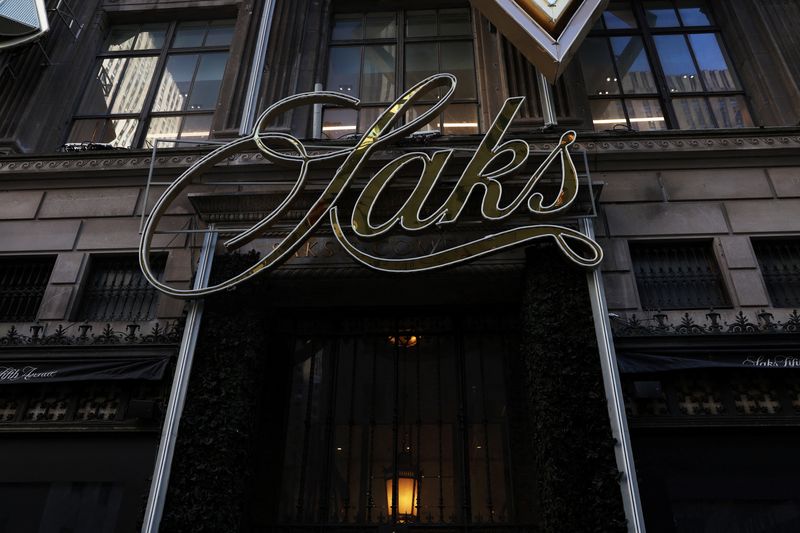
Saks Global filed for bankruptcy protection late on Tuesday, January 2026. The filing adds the luxury department store conglomerate to a long list of high-profile retail collapses in the United States over the past decade.
The company, which owns the Saks, Neiman Marcus, and Bergdorf Goodman chains, was created after its then-parent, Hudson's Bay, acquired rival Neiman Marcus in 2024. The bankruptcy marks one of the biggest retail collapses since the COVID-19 pandemic.
Other major American department stores have also filed for bankruptcy in recent years. Lord & Taylor filed for Chapter 11 bankruptcy in August 2020 during the coronavirus outbreak. Neiman Marcus filed for bankruptcy protection in May 2020 and completed its Chapter 11 process that September.
J.C. Penney filed for bankruptcy protection in May 2020. In December 2020, the company said its retail and operating assets would exit Chapter 11 after two of its biggest landlords, Simon Property Group and Brookfield Asset Management, acquired nearly all such assets.
Barneys New York filed for bankruptcy protection in August 2019 and put itself up for sale. A bankruptcy judge approved the sale of Barneys' brands and other intellectual property to licensing firm Authentic Brands, and the deal closed in November that year.
Sears Holdings, the parent of Sears, Roebuck and Co and Kmart Corp, filed for Chapter 11 bankruptcy in October 2018 following a decade of revenue declines and hundreds of store closures. The company's chairman, Eddie Lampert, prevailed in a bankruptcy auction for the store chain in January 2019 with an improved takeover bid of roughly $5.2 billion, allowing the retailer to keep its doors open.
Several other large American retailers have faced bankruptcy in recent years. Claire's Stores filed for bankruptcy protection for the second time in August 2025, with a plan to close hundreds of stores and find a buyer for about 800 remaining locations.
Rite Aid filed for bankruptcy for the second time in less than two years in May 2025 after a previous restructuring reduced its debt but failed to address long-term business challenges. Joann Fabrics filed for Chapter 11 protection in Delaware in January 2025, saying that inventory shortages had forced it back into bankruptcy for the second time in less than a year.
Party City Holdco, which had been struggling since the pandemic, filed for Chapter 11 bankruptcy protection in the United States for the second time in two years in December 2024. Lugano Diamonds filed for Chapter 11 in November 2025 to facilitate a sale of the business. The company reached an agreement with investment firm Enhanced Retail Funding to become a stalking horse bidder while it seeks additional bids amid the court-supervised sale process.
Bed Bath & Beyond filed for bankruptcy protection in April 2023 after it failed to secure funds to stay afloat. Christmas Tree Shops, which was spun off from Bed Bath & Beyond in 2020, filed for bankruptcy protection in May 2023. A U.S. judge in August 2023 converted the bankruptcy to a Chapter 7 liquidation.
Tailored Brands, the Men's Wearhouse owner, filed for bankruptcy in August 2020 following the economic fallout from the COVID-19 crisis. It emerged from bankruptcy protection in December 2020. Ascena Retail Group, the owner of Ann Taylor and Lane Bryant, filed for Chapter 11 protection in July 2020, succumbing to the economic fallout of the pandemic.
Brooks Brothers filed for Chapter 11 in July 2020 as the COVID-19 pandemic impacted business. The 200-year-old firm was acquired by Authentic Brands Group and Simon Property Group for $325 million in August 2020. J.Crew Group filed for bankruptcy protection in May 2020 with an agreement to eliminate $1.65 billion of debt in exchange for ceding ownership to lenders.
Forever 21 filed for bankruptcy in September 2019 as the rise of competition from online sellers and changing fashion trends dictated by millennial shoppers pulled down sales. The retailer's U.S. operating company filed for a second bankruptcy in March 2025 and said it would wind down its domestic operations.
Nine West Holdings emerged from bankruptcy process a year after it filed Chapter 11 in April 2018, reducing its pre-bankruptcy debt obligations by more than $1 billion and selling its Nine West and Bandolino footwear and handbag businesses to Authentic Brands Group for $340 million.
Toys 'R' Us, the then-largest U.S. toy store chain and owner of Babies "R" Us, filed for bankruptcy protection in late 2017, straining under a $2.5 billion debt pile. At the time, its bankruptcy was the biggest collapse of a U.S. retailer by assets since Kmart in 2002.