
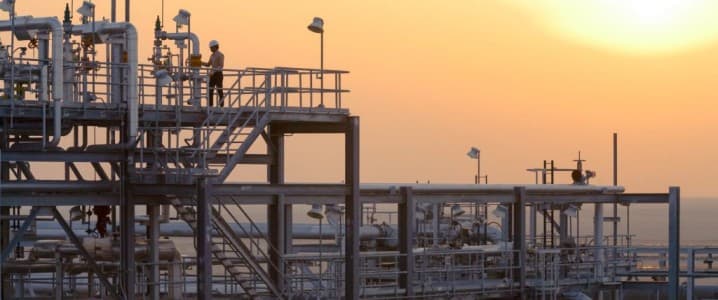
Saudi Arabia is accelerating development of its Jafurah shale basin, driven by energy security needs and export ambitions. The country plans to reduce crude burned for power generation and free up barrels for export under tight OPEC+ management. Officials announced the first condensate exports from the Jafurah gas plant will begin in February.
The $100 billion project holds an estimated 229 trillion standard cubic feet of natural gas and 75 billion barrels of condensate. Phase one targets 200 million standard cubic feet per day of gas production, with plans to reach 2 billion standard cubic feet daily by 2030. This would increase Aramco's gas output capacity by approximately 60%, supporting domestic power demand that grows 3-4% annually.
Industry projections suggest data center-related demand could add 150-200 billion cubic meters of gas globally each year by 2040. Saudi Arabia aims to position itself as a key Middle Eastern player in this segment. Aramco states peak production from its unconventional gas program could displace 500,000 barrels per day of oil used for electricity generation.
Historical data reveals patterns of discrepancy in Saudi Arabia's official energy figures. Proven oil reserves jumped from 170 billion barrels in 1989 to 257 billion barrels in 1990 without major new discoveries. By 2017, claimed reserves reached 268.5 billion barrels despite the country extracting an average 8.162 million barrels daily over that period.
Production capacity claims have also faced scrutiny. After September 2019 attacks on Abqaiq and Khurais facilities, Energy Minister Prince Abdulaziz bin Salman stated production capacity would reach 11 million barrels daily by month's end and 12 million barrels daily two months later. Actual production averaged 8.151 million barrels daily from 1973 to September 2019, with only one month briefly exceeding 11 million barrels.
The Energy Information Administration defines spare capacity as production that can be brought online within 30 days and sustained for 90 days. Following the 2019 attacks, Saudi Arabia reportedly expanded its definition to include crude in storage, purchased crude, and crude redirected from contracts.
Similar questions surround Jafurah projections. Early 2024 saw an additional 15 trillion cubic feet of gas declared proven, bringing the official total to 229 trillion cubic feet. The project's targeted 2 billion cubic feet daily by 2030 equals approximately 334,000 barrels of oil equivalent. Current crude burn for power generation exceeds 500,000 barrels daily, suggesting Jafurah's output may not cover existing demand, let alone projected increases.