
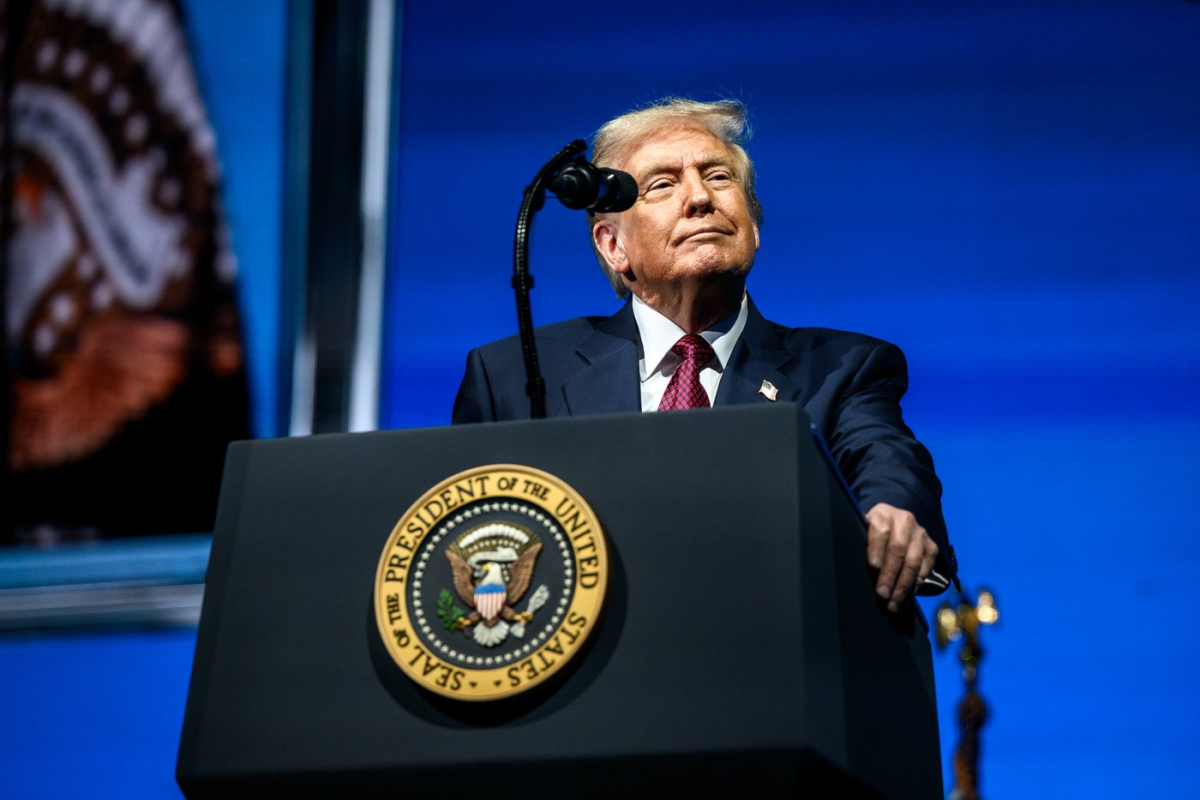
Major U.S. stock indexes have shown significant gains during President Donald Trump's time in office. The Dow Jones Industrial Average, S&P 500, and Nasdaq Composite rose 57%, 70%, and 142% respectively during his first term. In 2025, the first year of his second term, these indexes added further gains of 13%, 16%, and 20%.
Artificial intelligence development has contributed to market advances, while Trump's tax policy, which lowered the peak corporate tax rate to its lowest level since 1939, also played a role.
However, historical patterns raise questions about continued growth. The S&P 500's Shiller Price-to-Earnings Ratio, a long-term valuation measure, currently stands at 40.72, near its all-time high of 44.19 set in December 1999. Over the past 155 years, when this ratio has exceeded 30 on six occasions, subsequent declines of 20% to 89% have followed in major indexes.
"History has a way of rhyming on Wall Street," the report notes, though it emphasizes that no tool can consistently predict short-term market movements. The Shiller P/E ratio has limitations in timing declines, as shown by the dot-com bubble where high valuations persisted for years before correction.
Market cycles show distinct patterns. Bear markets for the S&P 500 have averaged 286 days since 1929, while bull markets typically last 1,011 days. Stock market crashes, often emotion-driven, can be brief; the COVID-19 crash saw a 34% decline in just 33 days.
Long-term data provides perspective. Analysis of 107 rolling 20-year periods from 1900 to 2025 shows every period produced positive annualized returns for the S&P 500, including dividends. This occurred despite corrections, bear markets, crashes, recessions, wars, and pandemics.
The Motley Fool Stock Advisor team has identified 10 stocks they consider better investments than the S&P 500 Index. Their recommendations have historically outperformed the market, with examples including Netflix and Nvidia generating substantial returns from earlier recommendations.
While a stock market crash doesn't appear imminent in Trump's second year, history suggests a sizable decline is expected at some point. For long-term investors, short periods of market turbulence can create wealth-building opportunities.