
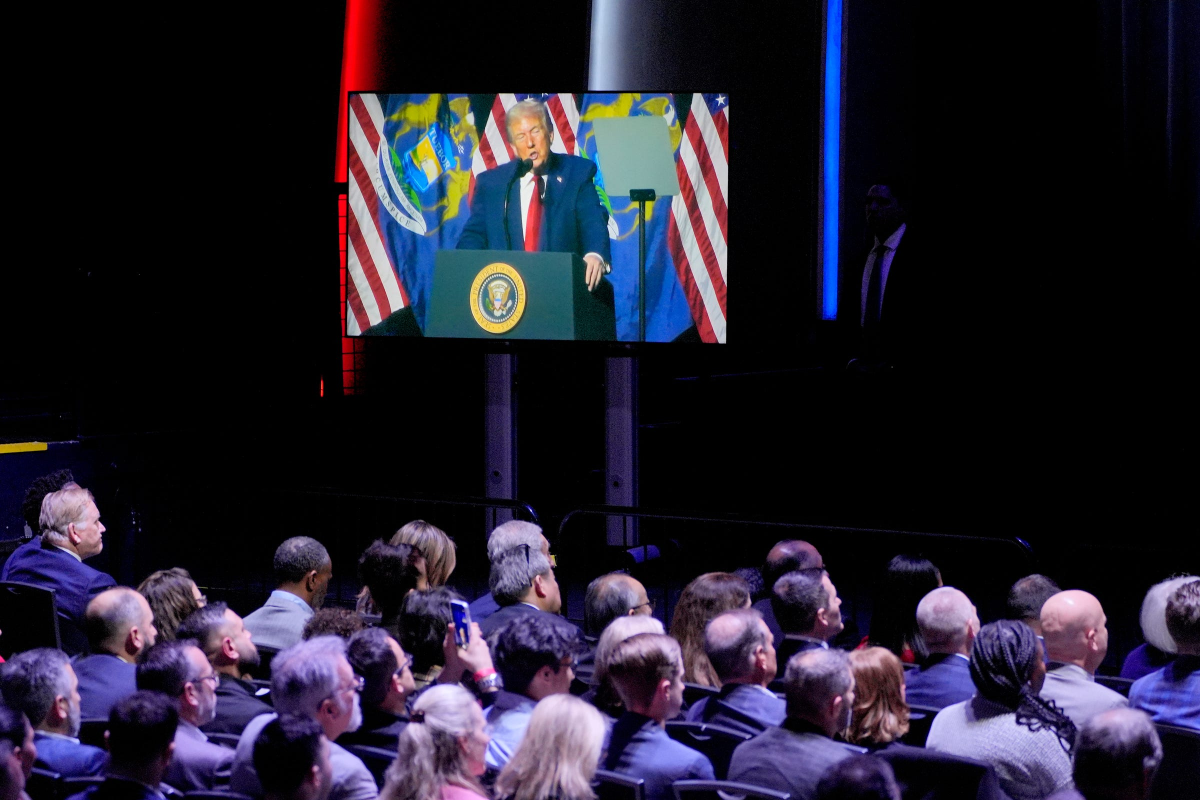
President Donald Trump has called for a one-year, 10 percent cap on credit card interest rates, a proposal that has drawn immediate criticism from banking groups. He made the announcement in a speech to the Detroit Economic Club on Tuesday, January 13, at the MotorCity Casino Hotel.
"The rates are way too high," Trump said during the event. He indicated he would outline his agenda further during a speech at the World Economic Forum's annual meeting in Davos, Switzerland, next week.
On Friday, January 9, Trump posted on Truth Social: "we will no longer let the American Public be 'ripped off' by Credit Card Companies that are charging Interest Rates of 20 to 30 percent, and even more." He stated he wants the cap to start as of January 20.
Banking experts argue that a 10 percent rate is too low to sustain lending to consumers with weaker credit histories. According to data from Bankrate.com, the average credit card rate currently offered is 19.65 percent. This is down slightly from 20.18 percent a year ago but up from 17.35% in early January 2020.
A Bankrate survey shows roughly 61 percent of cardholders with balances have been in debt for at least a year, up from 53 percent in late 2024. About 47 percent of credit cardholders report carrying a balance and being charged interest, with one in five debtors doubting they will ever pay it off.
Ted Rossman, a senior industry analyst at Bankrate.com, provided an example: making minimum payments on an average balance of $6,523 at 20 percent interest would result in 219 months of debt and $9,448 in interest. At 10 percent, it would be 196 months and $4,492 in interest. Rossman noted that most consumers would have difficulty finding a 10 percent credit card offer today.
Bankrate.com data indicates the last time the average marketed rate was near 10 percent was late January 2009, at 10.63 percent. Rossman said some credit unions offer low-rate cards, like Lake Michigan Credit Union's Visa with an APR between 9.75 percent and 18 percent, typically for the most creditworthy borrowers.
Banking groups issued a joint statement on January 9, arguing a 10 percent cap would drive consumers toward "less regulated, more costly alternatives." The statement came from the American Bankers Association, Bank Policy Institute, Consumer Bankers Association, Financial Services Forum, and Independent Community Bankers of America. They said the industry shares Trump's "goal of helping Americans access more affordable credit."
Another joint statement was issued on January 13 after Trump expressed support for the proposed Durbin-Marshall Credit Card Mandate, calling it "one surefire way to make life less affordable for Americans." Groups opposing the plan included the Consumer Bankers Association, American Bankers Association, America’s Credit Unions, Electronic Payments Coalition, Independent Community Bankers of America, and National Bankers Association.
Ruth Susswein, director of consumer protection at Consumer Action, agreed some consumers might face fewer credit card options, lower limits, and more fees. "But," she said, "the argument that charging exorbitant interest rates is necessary to keep the credit door open seems overblown."
Adam Levitin, a professor at Georgetown University Law Center, called a 10 percent cap a "terrible idea" in an essay on the Credit Slips website. "While it might sound great to get cheap credit, there’s no free lunch here," he wrote. Levitin pointed out that lenders likely cannot operate profitably at 10 percent and might stop lending or cut existing credit lines.
He noted the proposal reworks a bill from 2025 sponsored by Bernie Sanders and Josh Hawley in the Senate and Alexandria Ocasio-Cortez and Anna Paulina Luna in the House. Levitin also mentioned that a 1978 U.S. Supreme Court ruling allowed banks to set up in states with no or high caps, like South Dakota, Delaware, and Utah, contributing to higher rates.
The Military Lending Act caps APRs at 36 percent for service members, and federally chartered credit unions have an 18 percent APR cap on credit cards. Trump has not proposed a cap on car loan rates, but Cox Automotive data shows the average new car loan rate was 8.88 percent in December. Jonathan Gregory, a senior analyst at Cox Automotive, noted roughly one in nine new vehicle loans had rates above 10 percent that month.