
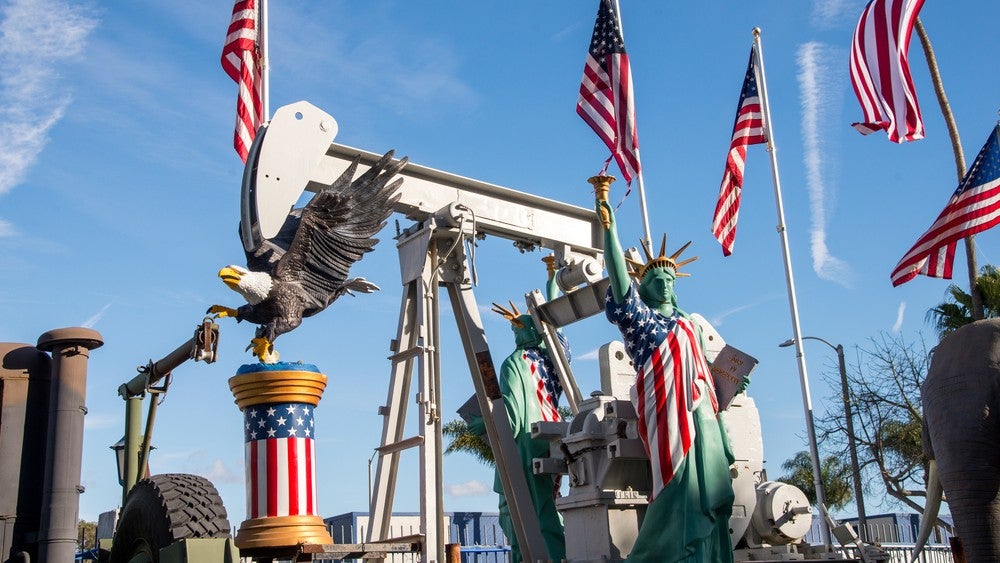
As President Donald Trump's second inauguration anniversary approaches, his administration's oil and gas policies are taking shape. The strategy has focused on expanding licensing while avoiding tariffs on energy imports.
Crude oil production rose 5.56% from January to October 2025, reaching 13.87 million barrels per day. The Energy Information Administration projects natural gas production will increase 3.9% in 2025.
"Oil prices now are too low, and general cost inflation too high, to justify a large investment in increased production," said Kenny Stein, vice-president of policy for the Institute for Energy Research.
Stein added, "I wouldn't expect production to fall necessarily, but any increase will be limited and gradual, from improved efficiency or technology deployment."
The administration reversed Biden-era restrictions on federal land leasing. "The biggest actual change so far is that leasing on federal lands has the green light again," Stein noted.
On July 4, 2025, Trump signed the One Big Beautiful Bill Act, outlining 36 offshore oil and gas licenses over 15 years. In November 2025, the Department of the Interior released a draft plan for 34 additional potential lease sales from 2026-2031.
"We finally have new access to the Gulf of America and federal lands," said Mike Sommers, CEO of the American Petroleum Institute, during a press call this week. "We have been incredibly supportive of the President's regulatory agenda."
Trump also ended Biden's pause on LNG export projects to non-Free Trade Agreement countries. Since then, several export projects have received approval.
Paul Hasselbrinck, an analyst at GlobalData, said the policy changes "have resulted in a 55% increase of drilling permits in his first year."
The Environmental Protection Agency has proposed revoking several emissions standards, including 2015 rules requiring power sector emissions reductions and 2024 rules for fossil fuel plants.
Sommers called these "historic reforms that are going to benefit the American oil and gas industry." But Hasselbrinck warned that "regulatory changes have been rushed" and create "legal instability which hinders long-term business planning."
No tariffs have been applied to crude oil, natural gas or refined fuel imports. This protects refinery profit margins and consumer prices.
The U.S. imported approximately 8.51 million barrels per day of petroleum in 2023, with 76% being crude oil used primarily on the Gulf Coast.
"The industry has been successful in convincing the administration to include carveouts or reductions in tariffs for physical oil and gas itself," said Stevens. "However, they have not seen that success regarding tariffs for steel and aluminium."
In June 2025, Trump increased steel and aluminium tariffs from 25% to 50%. Steel comprises about 10% of manufacturing costs in oil and gas, with tariffs expected to increase costs by 5.6% long-term.
"The most harmful individual tariff has been on imported steel, which impacts machinery and infrastructure across the supply chain," Hasselbrinck commented.
He added, "Tariff and trade uncertainty hurting economic prospects is far more damaging to the industry than any individual cost hike."
Despite production increases, rising costs are squeezing profit margins. Rig counts have declined across both oil and gas operations.
"All that negative pressure has completely dispersed," said Stevens. "ESG has been abandoned, tech companies want cheap and reliable energy from natural gas and the regulatory sword of Damocles has been removed."
Sommers noted, "Barack Obama had a war on coal. Joe Biden had a war on oil and gas. It is time for everyone to put their swords down and work towards comprehensive reform."
In March 2025, EPA administrator Lee Zeldin called regulatory reconsideration "the greatest day of deregulation our nation has seen."
Of 31 regulatory actions under review, two have been finalized, including an 18-month extension for the oil and gas industry to meet emissions standards.
"We were appreciative of the delays that EPA announced last year," Sommers said. "What we are doing now is working with them on crafting durable rules that we think are common sense."