
The United States and Taiwan finalized a trade agreement on Thursday, reducing tariffs on Taiwanese goods in return for $250 billion in new investments targeting the U.S. technology sector.
President Donald Trump, who previously set tariffs on Taiwanese goods at 32% before adjusting to 20%, has now agreed to lower the rate to 15%. This matches the tariff level applied to other U.S. partners in Asia, such as Japan and South Korea.
In a statement, the U.S. Department of Commerce said the deal establishes an "economic partnership" to develop "world-class" industrial parks in the U.S., aiming to strengthen domestic production. The department called it "a historic trade deal that will drive a massive reshoring of America’s semiconductor sector."
The Taiwanese government confirmed details, stating the "Taiwan model" will support expanding the island's tech industry globally and deepen strategic cooperation with the U.S. Taiwan's executive branch specified that companies will invest $250 billion in semiconductors, artificial intelligence, and energy.
Beyond tariff cuts, the Commerce Department noted exemptions for certain imports from Taiwan, including generic pharmaceuticals and aircraft components. Taiwanese semiconductor producers investing in the U.S. will receive favorable tariff treatments, including exemptions.
Beijing, which claims Taiwan as part of China, dismissed the agreement a day before its announcement, labeling it "an economic plunder" by the U.S. on Taiwan.
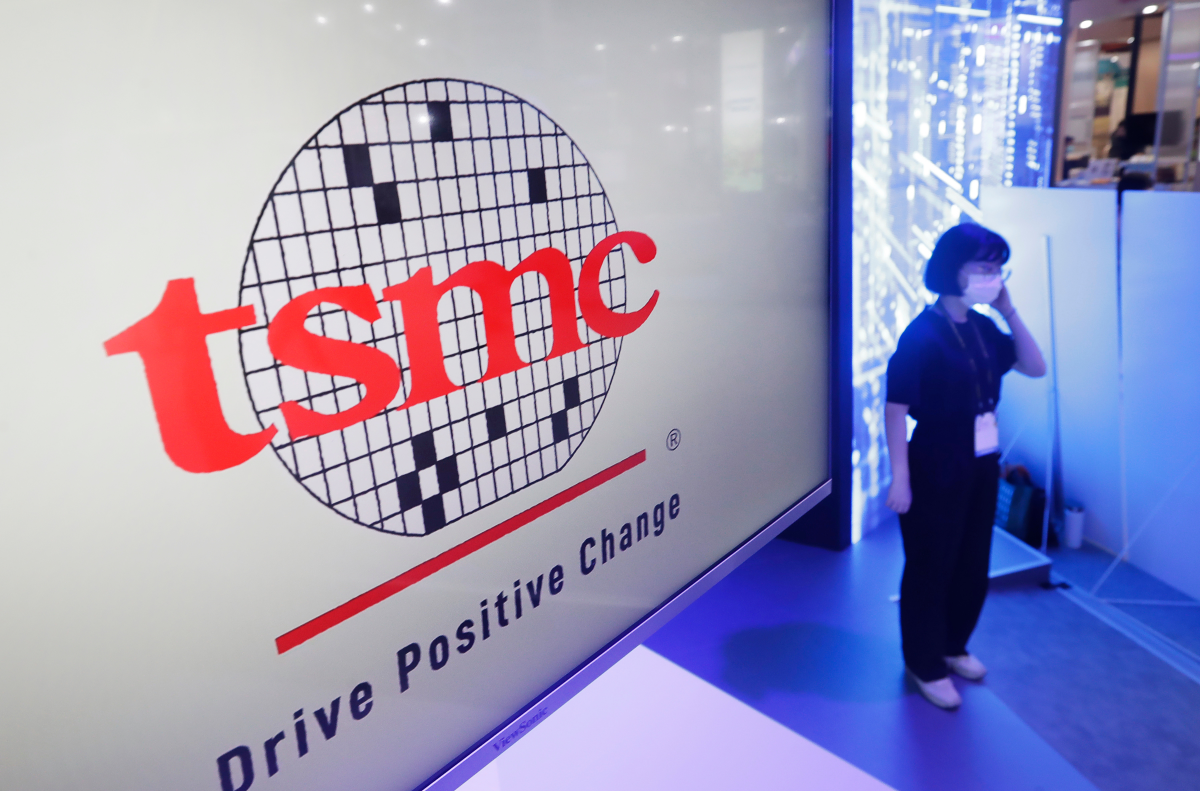
Taiwan Semiconductor Manufacturing Co. (TSMC), the world's largest computer chipmaker, reported a 35% rise in net profit to 506 billion new Taiwan dollars ($16 billion) for the October-December quarter, exceeding analyst expectations. Revenue increased 21% to over 1.046 trillion new Taiwan dollars ($33 billion).
TSMC plans to raise its capital expenditure budget to $52 billion-$56 billion for 2026, up from about $40 billion last year. The company's shares have surged 59% in the past year, reflecting its strong position in the AI market.
TSMC's chief financial officer, Wendell Huang, said on a conference call, "We expect our business to be supported by continuous strong demand for our leading edge process technologies." He added that spending would be "significantly higher" over the next three years.
When asked about concerns over an AI bubble, TSMC chairman and CEO C. C. Wei responded, "I'm also very nervous about it, you bet. AI is real. Not only real, it's starting to grow into our daily life."
TSMC has committed around $165 billion in U.S. investments and is accelerating construction of new plants in Arizona to create a fabrication cluster and meet client demand. With a market capitalization of about $1.4 trillion, TSMC is Asia's most valuable listed company.
Analysts from Morningstar noted in a recent report that TSMC's outlook remains optimistic due to its dominant role in chip manufacturing. They stated, "It is immune from market share shifts as almost every AI company relies on TSMC to make chips... This reliance translates into strong pricing power."