
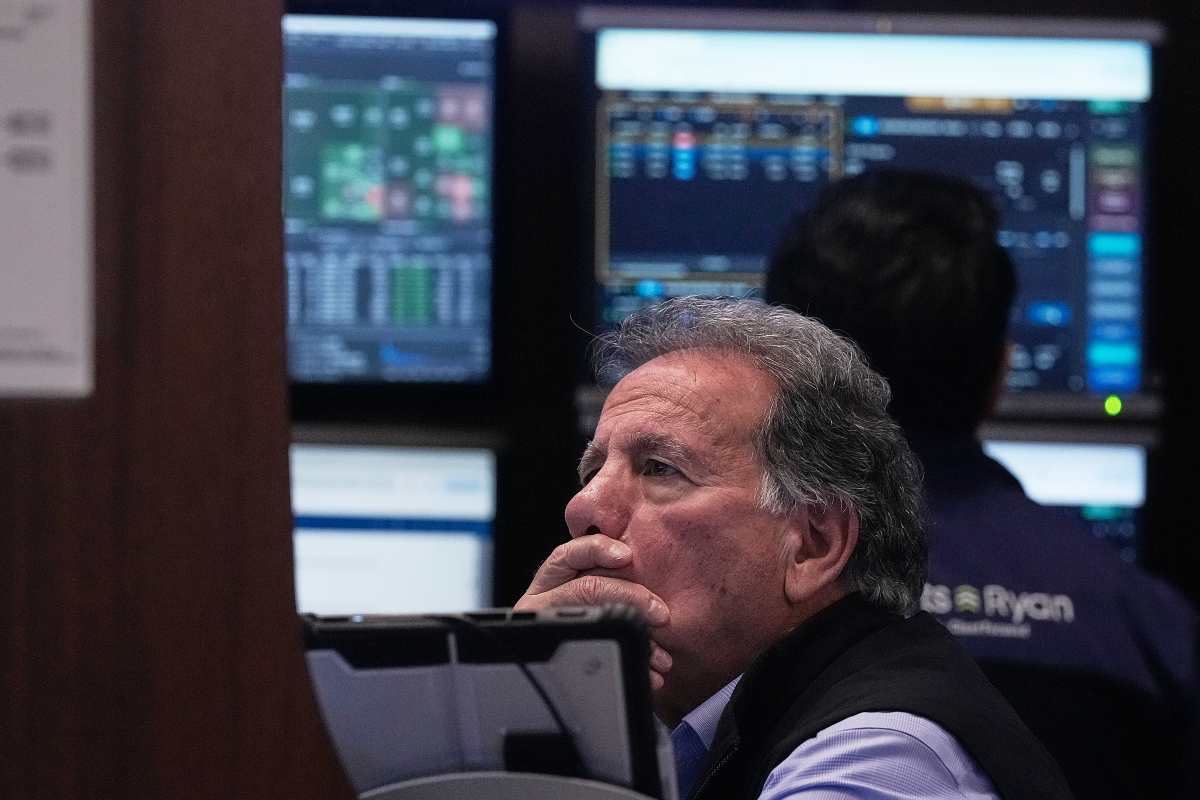
US stocks surrendered their early morning advances on Friday, with uncertainty surrounding the next Federal Reserve chair pressuring markets. Strong earnings from banks and ongoing geopolitical strains concluded a week marked by sharp swings.
The Nasdaq Composite, heavily weighted with technology stocks, trimmed earlier gains to fall below the flatline. The S&P 500 declined 0.1%, and the Dow Jones Industrial Average edged down 0.2% after breaking a two-day losing streak the previous day.
Stocks reversed course after President Trump indicated fresh hesitation about appointing Kevin Hassett as the next Fed chair. This fueled market speculation that the central bank might adopt a less dovish stance than anticipated when Jerome Powell's term concludes in May.
"I actually want to keep you where you are, if you want to know the truth," Trump told Hassett during a White House event.
Wall Street is assessing a turbulent week characterized by heightened tensions with Iran, disputes over Greenland, and a criminal probe threatening Federal Reserve independence—all developments linked to Trump. Investors have a long weekend to process these events, with stock and bond markets closed Monday for Martin Luther King Jr. Day.
TSMC and Nvidia saw further gains, partly due to a US-Taiwan trade agreement expected to boost American chip and tech manufacturing by $250 billion. TSMC shares rose Thursday following a robust quarterly report that reignited enthusiasm for artificial intelligence, lifting related stocks more broadly.
Friday's earnings spotlight fell on smaller banks like PNC and Regions Financial, after a week of positive reports from major Wall Street firms. Shares of Goldman Sachs and Morgan Stanley advanced Thursday after reporting profit increases, providing support to financial stocks.
Meanwhile, silver prices declined as the threat of US tariffs diminished, though the metal remained up more than 15% for the week following a sustained rally in precious metals.