
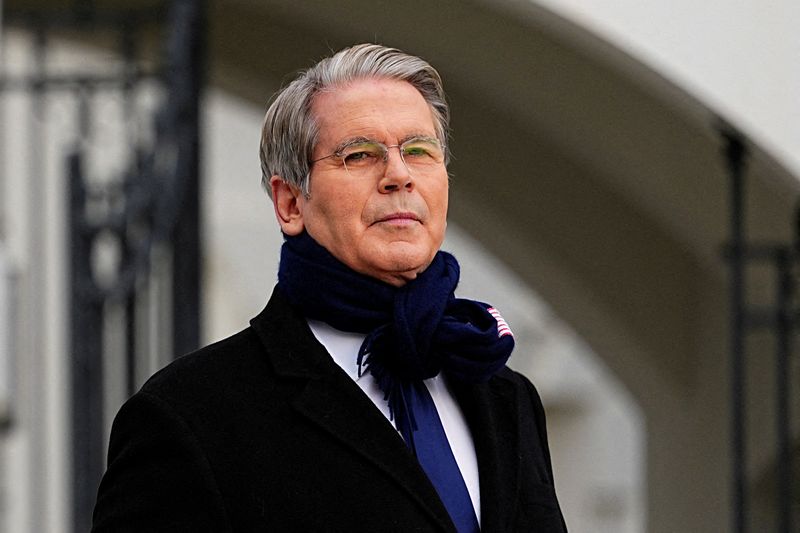
SEOUL, Jan 15 (Reuters) - A senior South Korean official stated on Thursday that recent comments by U.S. Treasury Secretary Scott Bessent regarding the Korean won highlight the significance of foreign exchange stability for economic cooperation between Seoul and Washington.
Deputy Finance Minister Choi Ji-young noted that currency stability is a crucial factor, as volatility could impede progress on a $350 billion U.S. investment pledged by South Korea.
Bessent said on Wednesday he had discussed the won's recent depreciation with South Korean Finance Minister Koo Yun-cheol, adding that the currency's performance did not align with the country's economic fundamentals.
"The U.S. Treasury Department's rare comments on South Korea's foreign exchange market and its assessment that recent weakness in the won was undesirable reflect the fact that the won's stable trend is an important factor for the implementation of strategic investments," Choi told a briefing.
Choi said finance authorities from both countries will communicate and cooperate closely on foreign exchange market stability, referencing an earlier agreement to delay investments in cases of market instability.
Seoul and Washington finalized a trade deal in November that lowers U.S. tariffs on imports from South Korea, in exchange for a $350 billion investment package in strategic U.S. sectors. This followed months of negotiations over the investment package's foreign exchange implications.
According to the deal, if investments are expected to cause disorderly movements in the foreign exchange market, South Korea could seek an "adjustment in the amount and timing of the funding, and the United States will, in good faith, give due consideration to such request."
The Bank of Korea on Thursday signaled an end to its current easing cycle amid concerns about a weak won, after Koo vowed on Wednesday to take steps to rein in increasing volatility in the foreign exchange market.
Choi said authorities are considering introducing new macro-prudential policies to ease discrepancies between recent foreign exchange conditions and macroeconomic fundamentals.
South Korea's ruling Democratic Party introduced a bill in November to establish a special fund to finance the $350 billion investment package. The bill has not been passed yet.