
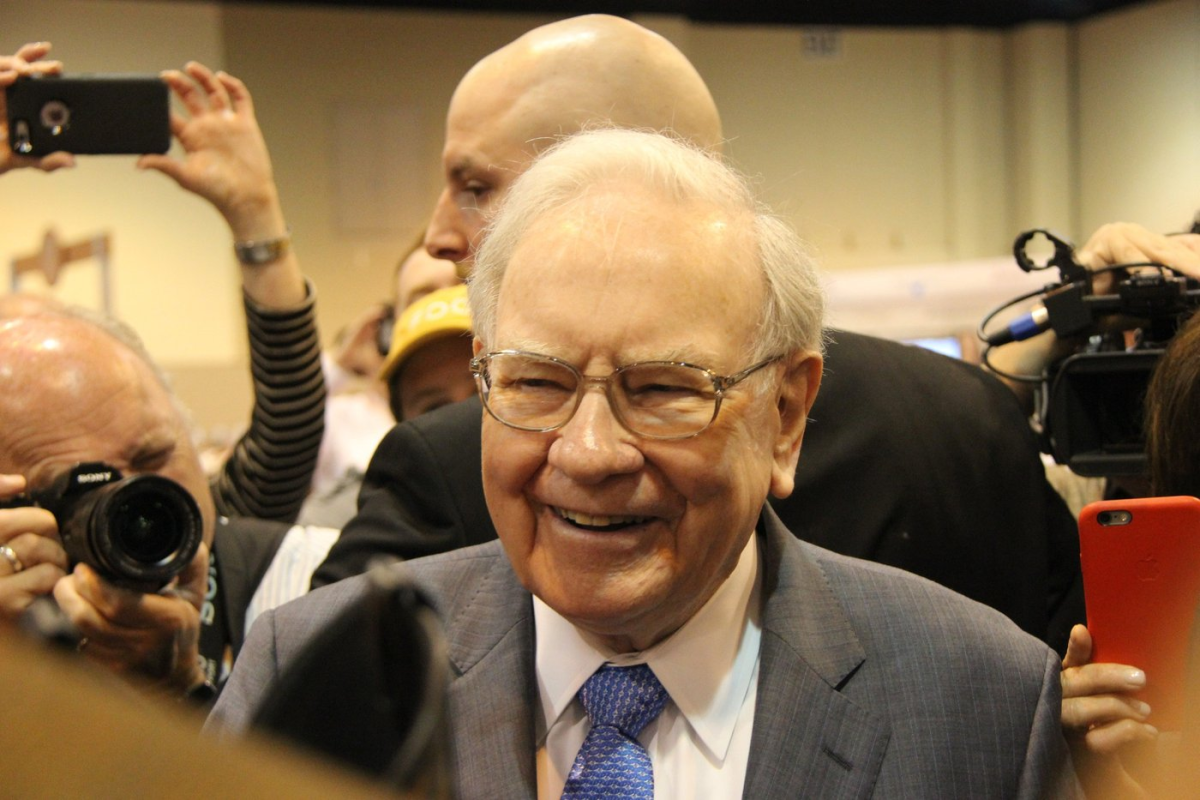
Warren Buffett concluded his role as chief executive officer of Berkshire Hathaway at the end of 2025. He had led the company since 1965. Over his 60-year tenure, Berkshire Hathaway evolved from a textiles manufacturer into a conglomerate valued at $1 trillion. The company now holds more than 60 wholly owned subsidiaries and minority stakes in over 40 other firms.
Berkshire stock achieved a compound annual return of 19.7% during Buffett's leadership. This performance would have turned a $500 investment in 1965 into $24.2 million. Buffett has stated that typical investors might find it difficult to match such results. He frequently advises buying a low-cost S&P 500 index fund instead of selecting individual stocks.
In a 2013 letter to shareholders, Buffett specifically pointed to the Vanguard S&P 500 ETF. He cited its ultra-low fees as a key reason. The fund seeks to replicate the performance of the S&P 500 index.
The S&P 500 index includes 500 companies from 11 economic sectors. It is rebalanced quarterly. Companies must meet criteria including profitability and a market capitalization of at least $22.7 billion for inclusion. A special committee makes the final selection.
The index is weighted by market capitalization. Information technology is the largest sector, with a 33.7% weighting. This sector contains Nvidia, Apple, Microsoft, and Broadcom. Their combined market capitalization is $13.5 trillion.
Financials represent 13.5% of the index, including Berkshire Hathaway, JPMorgan Chase, and Visa. Consumer discretionary accounts for 10.6%, with companies like Amazon, Tesla, and McDonald's. Communication services make up 10.5%, featuring Alphabet, Meta Platforms, and Netflix.
The remaining seven sectors are healthcare, industrials, consumer staples, energy, utilities, materials, and real estate. The Vanguard S&P 500 ETF aims to hold the same stocks with similar weightings. Its expense ratio is 0.03%, costing $3 annually on a $10,000 investment.
According to investment management firm Capital Group, the S&P 500 experiences a sell-off of at least 5% about once per year on average. A correction of 10% or more occurs roughly every two and a half years. Bear markets, with declines of 20% or more, happen approximately every six years.
Since its establishment in 1957, the S&P 500 has produced a compound annual return of 10.6%. A $10,000 investment 68 years ago would now be worth $9.4 million, assuming reinvested dividends.
The Motley Fool Stock Advisor analyst team recently identified ten stocks for investors. The Vanguard S&P 500 ETF was not among them. The team suggested these ten stocks could generate significant returns. They cited past recommendations, noting that a $1,000 investment in Netflix in December 2004 would now be worth $482,209. A similar investment in Nvidia in April 2005 would be worth $1,133,548.
Stock Advisor's total average return is reported as 968%, compared to 197% for the S&P 500.