
Taiwan's Vice Premier Cheng Li-chiun announced on Friday that the island aims to become a close strategic partner with the United States in artificial intelligence following a trade agreement. The deal, struck on Thursday, reduces tariffs on many Taiwanese exports and directs new investments into the U.S. technology sector.
"In this negotiation, we promoted two-way Taiwan–U.S. high-tech investment, hoping that in the future we can become close AI strategic partners," Cheng said during a press conference in Washington that was livestreamed. Cheng led the talks that resulted in the agreement.
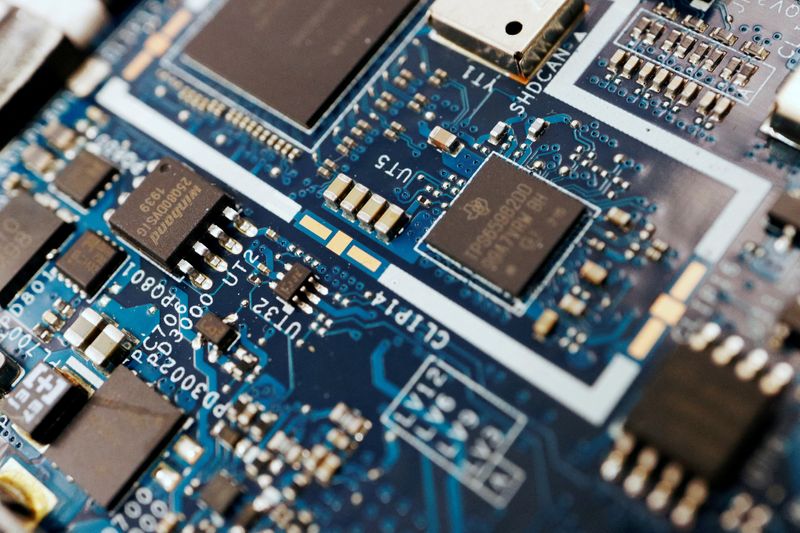
U.S. Commerce Secretary Howard Lutnick stated that Taiwanese companies will invest $250 billion to boost production of semiconductors, energy, and artificial intelligence in the United States. This figure includes $100 billion already committed by chipmaker TSMC in 2025, with more to follow. The Trump administration said Taiwan will also guarantee an additional $250 billion in credit to facilitate further investment.
Cheng described the deal as "win-win," noting it would also encourage U.S. investment in Taiwan. She emphasized that the investment plan is company-led, not government-driven, and that Taiwanese companies will continue to invest at home. "We believe this supply-chain cooperation is not 'move,' but 'build.' We expand our footprint in the U.S. and support the U.S. in building local supply chains, but even more so, it is an extension and expansion of Taiwan's technology industry," Cheng added.
Taiwan Economy Minister Kung Ming-hsin told reporters in Taipei that investments would also cover AI servers and energy, leaving it to companies to disclose chip-related amounts. Taiwan's benchmark stock index closed at a record high on Friday, buoyed by strong TSMC fourth-quarter earnings and positive investor reaction to the tariff deal.
Chang Chien-yi, President of the Taiwan Institute of Economic Research, told Reuters, "Taiwan is the first country the U.S. has publicly announced as receiving the most preferential treatment for chips and related products, highlighting that Washington views Taiwan as a key strategic partner in semiconductors."
TSMC, the world's main producer of advanced AI chips, welcomed the prospect of "robust" trade pacts between the United States and Taiwan in a statement. "The market demand for our advanced technology is very strong," it said. "We continue to invest in Taiwan and expand overseas." All investment decisions are based on market conditions and customer demand, TSMC added.
Once signed, the deal must be ratified by Taiwan's parliament, where the opposition holds the most seats and has expressed concern about the "hollowing out" of the crucial chip industry under a U.S. trade agreement. Lutnick told CNBC in an interview on Thursday that the objective was to bring 40% of Taiwan's entire chip supply chain and production to the United States. If not built in the U.S., tariffs could reach 100%.
Kung said he did not know how the 40% figure was calculated but estimated that by 2036, production split between Taiwan and the U.S. would be 80/20 for advanced chips of five nanometres and below. "This round of deployment will strengthen the resilience of Taiwan–U.S. and global semiconductor supply," he stated. "A moderate level of global diversification is also necessary. Going forward, the biggest AI orders will come from the U.S. market."
Lutnick called the semiconductor investment the largest in U.S. history in a post on X, sharing a picture with Cheng, Taiwan's top trade representative Yang Jen-ni, and U.S. Trade Representative Jamieson Greer. Taiwan Vice President Hsiao Bi-khim posted a similar picture on her Facebook page, saying the island had shown its strength on the global trade stage. "Taiwan may not be large in area, but we are agile and innovative - and we are an indispensable force for good within the global supply chain," she added.
China regards democratically-ruled Taiwan as its own territory and strongly objects to high-level U.S.-Taiwan exchanges. Taiwan rejects Beijing's sovereignty claims.